Apartment living · Seasonal guide
Winter Coat and Boot Storage for a Small Entryway
Set up a small entryway for coats, boots and wet gear this winter with wall hooks, a boot tray and a few rules that keep the floor clear.
Updated September 2026
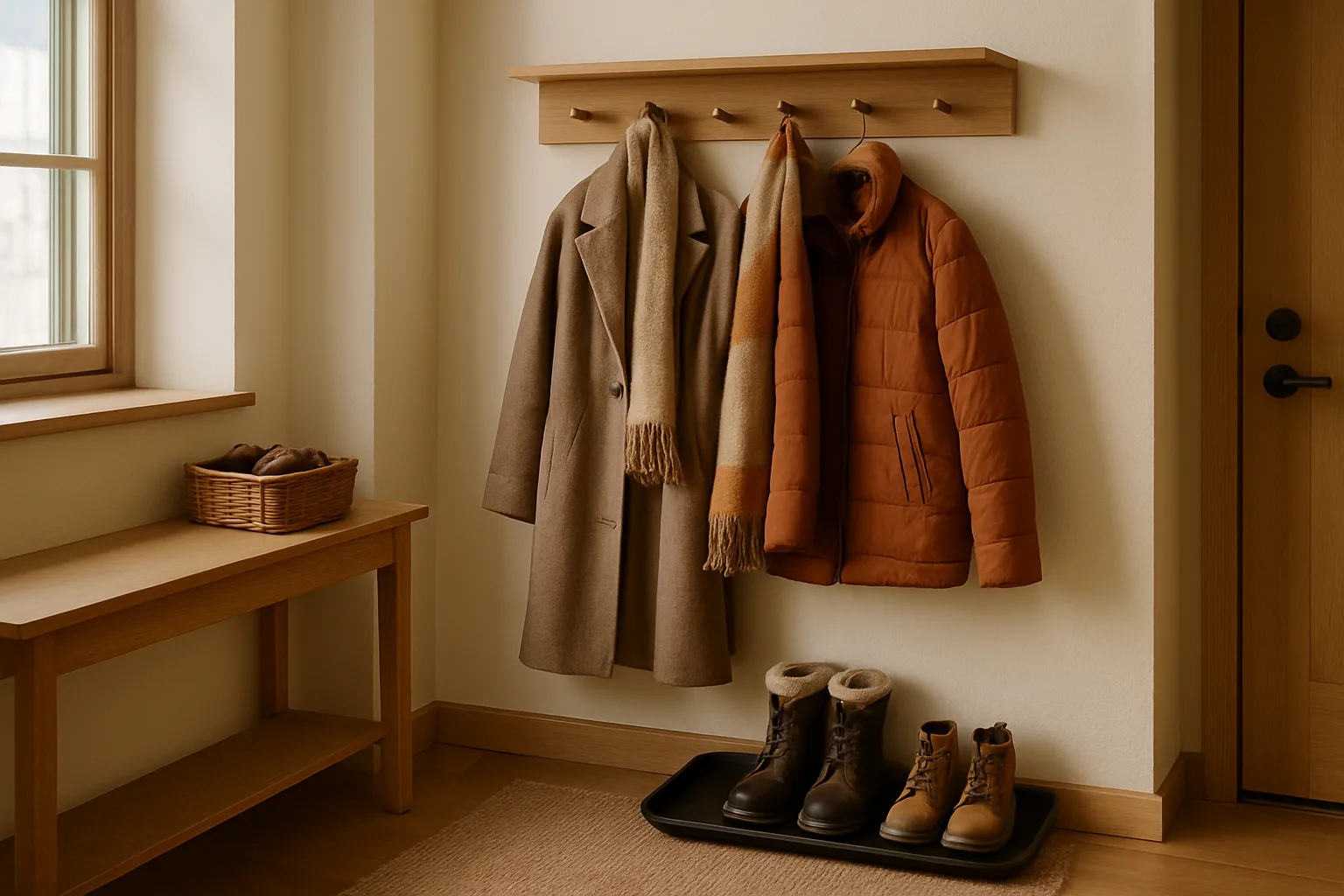
Quick answer: Put coats on the wall, not on a chair: a rack with hooks and a shelf, a boot tray by the door for wet shoes, and a small basket for hats and gloves. Limit the entry to what you wear this week; the rest goes back to the closet.
Top picks at a glance
Wall-mounted coat rack with shelf
- Pros: Five to eight hooks and a shelf above for hats: the fastest way to get coats off the chair. Choose one that screws into studs or uses heavy-duty anchors for winter coats.
- Con: Renters should check the lease; adhesive hooks hold light jackets but not a wool coat.
Boot tray
- Pros: Catches slush and salt so the floor stays dry. A tray with a raised edge and a grid insert dries boots faster; 30 inches fits three pairs.
- Con: It only works if it is right at the door, in the path where shoes come off.
Over-the-door hook organizer
- Pros: No drilling: hangs on the coat closet or bathroom door and takes scarves, bags and the kids' jackets in the space you already have.
- Con: Doors with thick trim may not close; measure the top of the door first.
Decide what lives at the door
The small-entry rule: only this week's coats, this week's shoes and the things you grab on the way out (keys, gloves, dog leash). Everything else belongs in the closet. In winter that usually means two coats per person and two pairs of shoes; the rest rotates back when the weather changes. Write that number down and hold to it.
Use the wall, then the floor
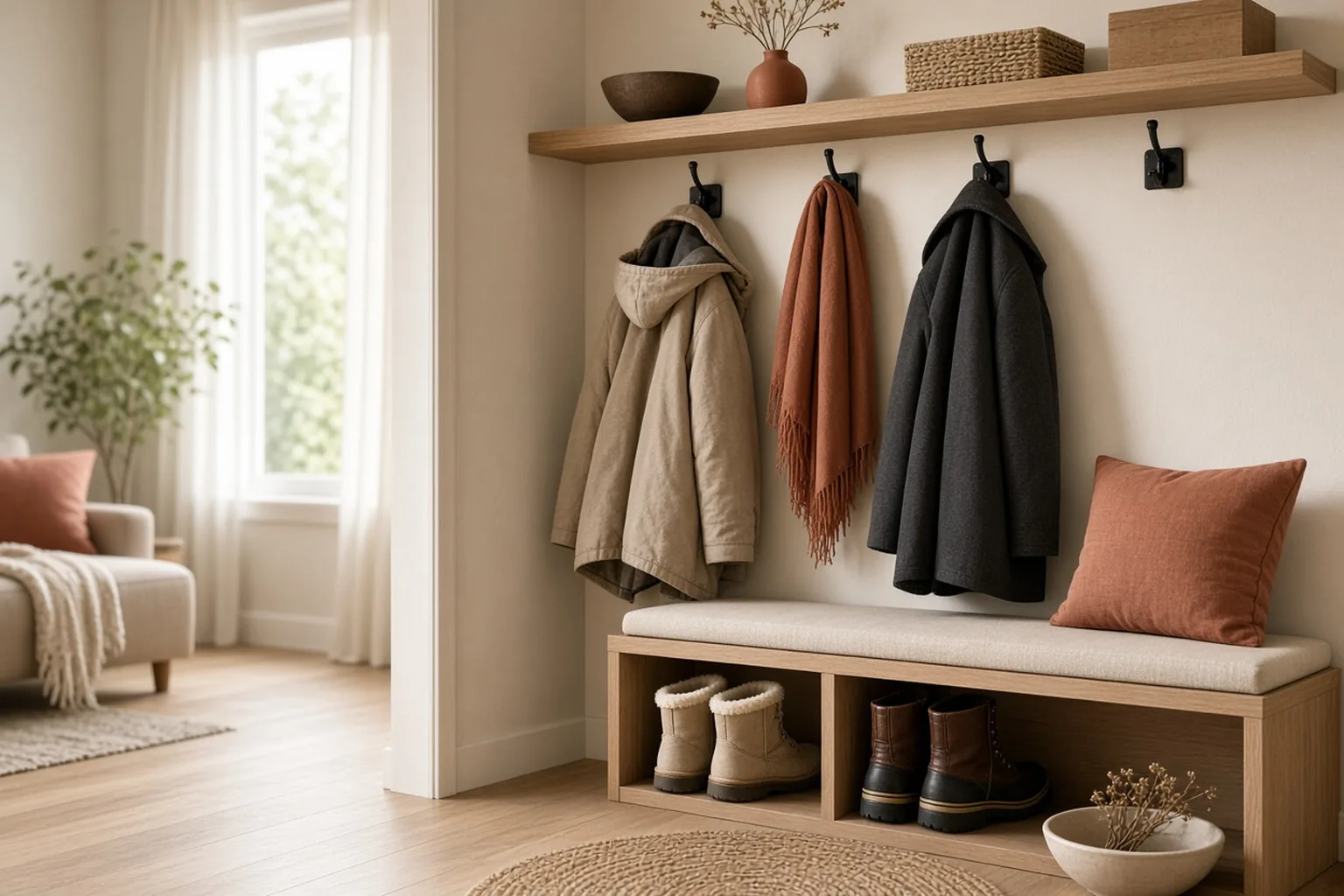
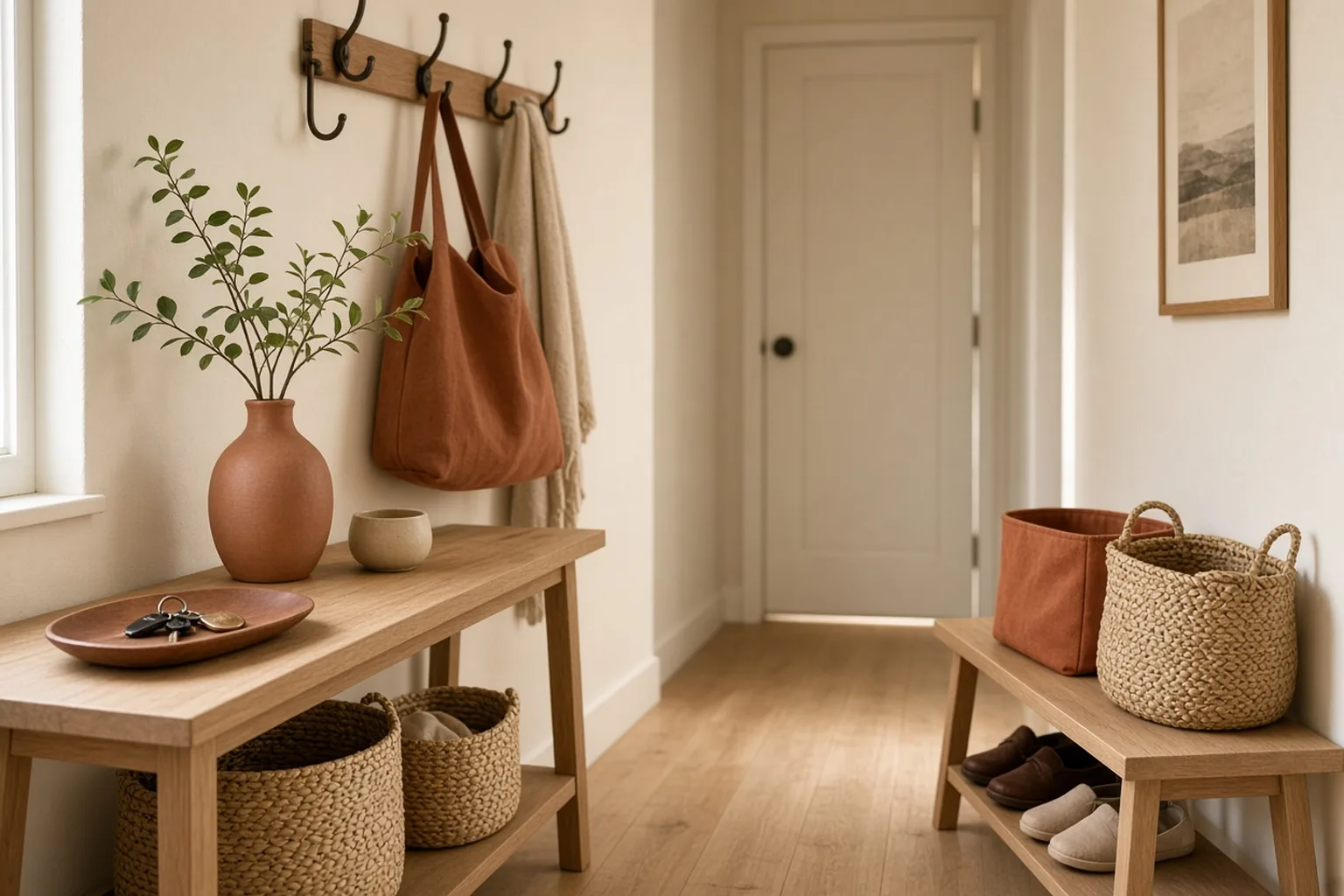
Hooks beat hangers in an entryway because people use them. A wall rack at 65 inches for adults, a second row at 45 inches for kids, and a shelf above for hats. Below, a boot tray marks the shoe zone and protects the floor from salt and slush. If you rent and cannot drill, use an over-the-door rack or a freestanding rack; our guide to entryway organization for small spaces covers the layout in more detail.
Keep wet gear from spreading
Wet gloves and scarves are what turns an entry into a pile. Give them one basket on the shelf or a small drying rack that folds against the wall. Umbrellas go in a narrow stand or a hook, not on the floor. A door mat outside and a washable rug inside cut the amount of water that comes in.
Do a Sunday reset
Once a week take everything off the hooks that has not been worn, return it to the closet and wipe the boot tray. It takes five minutes and prevents the entryway from becoming winter storage. For coats that will not be worn until next year, see how to store off-season clothes.
Our take
A wall rack, a boot tray and a basket for small things is the whole system. The only real decision is where the rack goes: put it on the wall you actually pass, even if it is not the prettiest one.
FAQ
How many hooks do I need?
Two per person who lives there, plus two for guests. More hooks invite more coats; keep it tight.
What can I use instead of a boot tray?
A rubber door mat with a raised edge, or a large baking tray with a towel. The point is a defined, waterproof spot right at the door.
Where do heavy winter coats go in a studio?
On the wall rack in the entry if you wear them daily; otherwise in the closet on a wide wooden hanger, not a hook, so the shoulders keep their shape.
Keep reading
Related guides
Apartment living
Best Storage Bins and Bin Systems for Small Homes
A practical guide to choosing storage bins and bin systems for small homes, with advice on size, access, stacking, and flexibility.
Apartment living
Best Storage Ottomans for Studio Apartments
A practical guide to choosing storage ottomans for studio apartments, with advice on size, access, materials, comfort, and layout.
Apartment living
Entryway Organization Ideas for Small Spaces
Create a useful small entryway with a landing zone, vertical hooks, shoe control, mail sorting, and renter-friendly storage.