Shower Caddy Types Compared: Tension Pole vs Suction vs Hanging
Updated September 2026
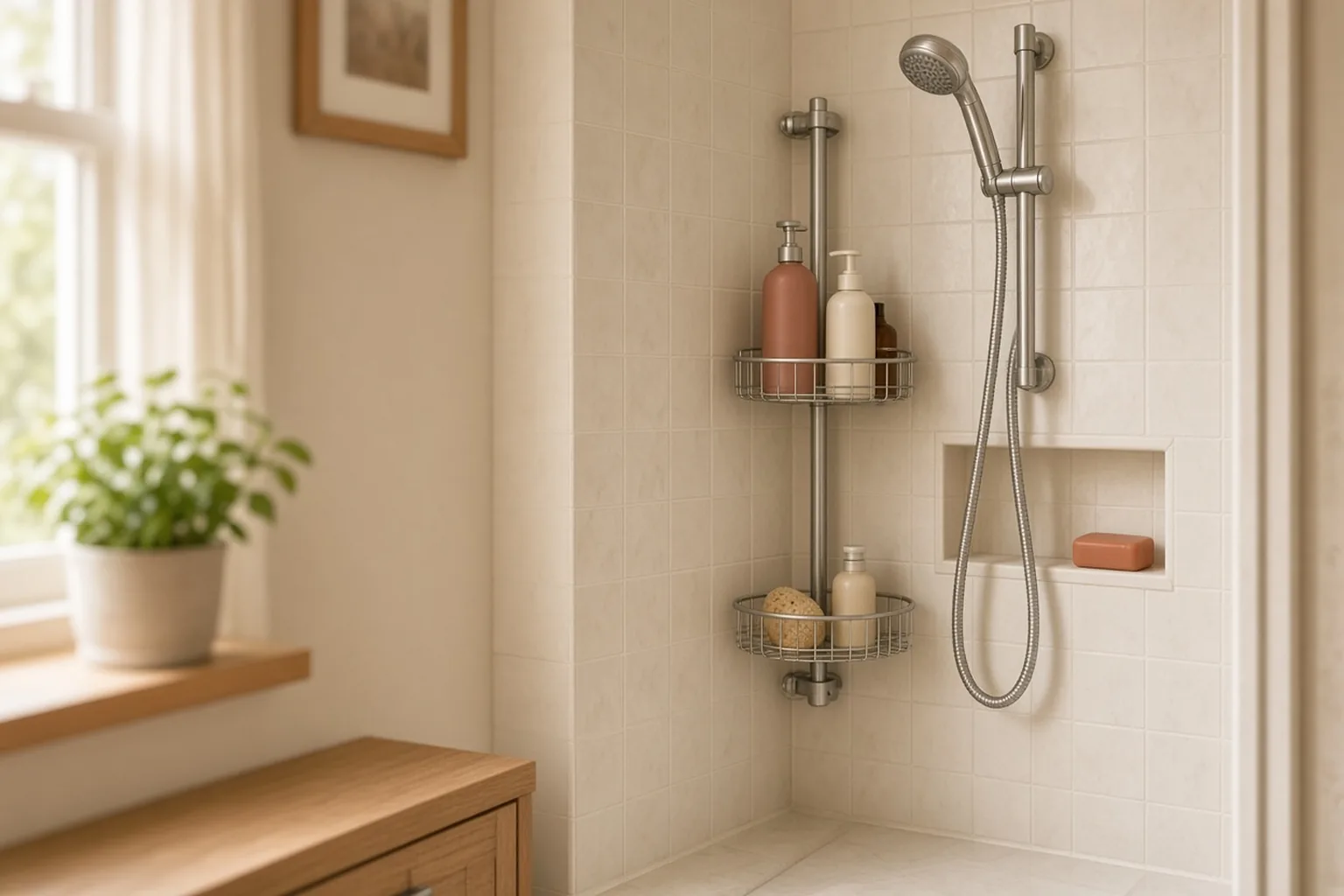
Quick answer: A shower caddy can make a small bathroom feel calmer, but the wrong style can create a different problem: bottles that tip over, shelves that loosen, or a fixture that does not fit your shower at all. The best choice depends less on appearance than on the surfaces and space you already have.
Top picks at a glance
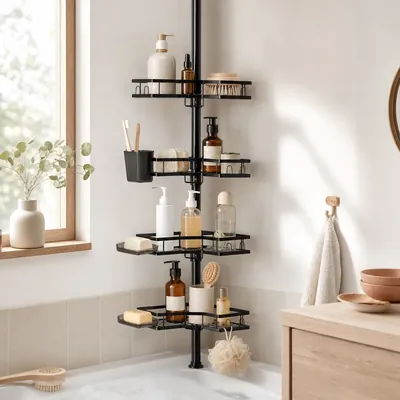
Tension Pole Shower Caddy
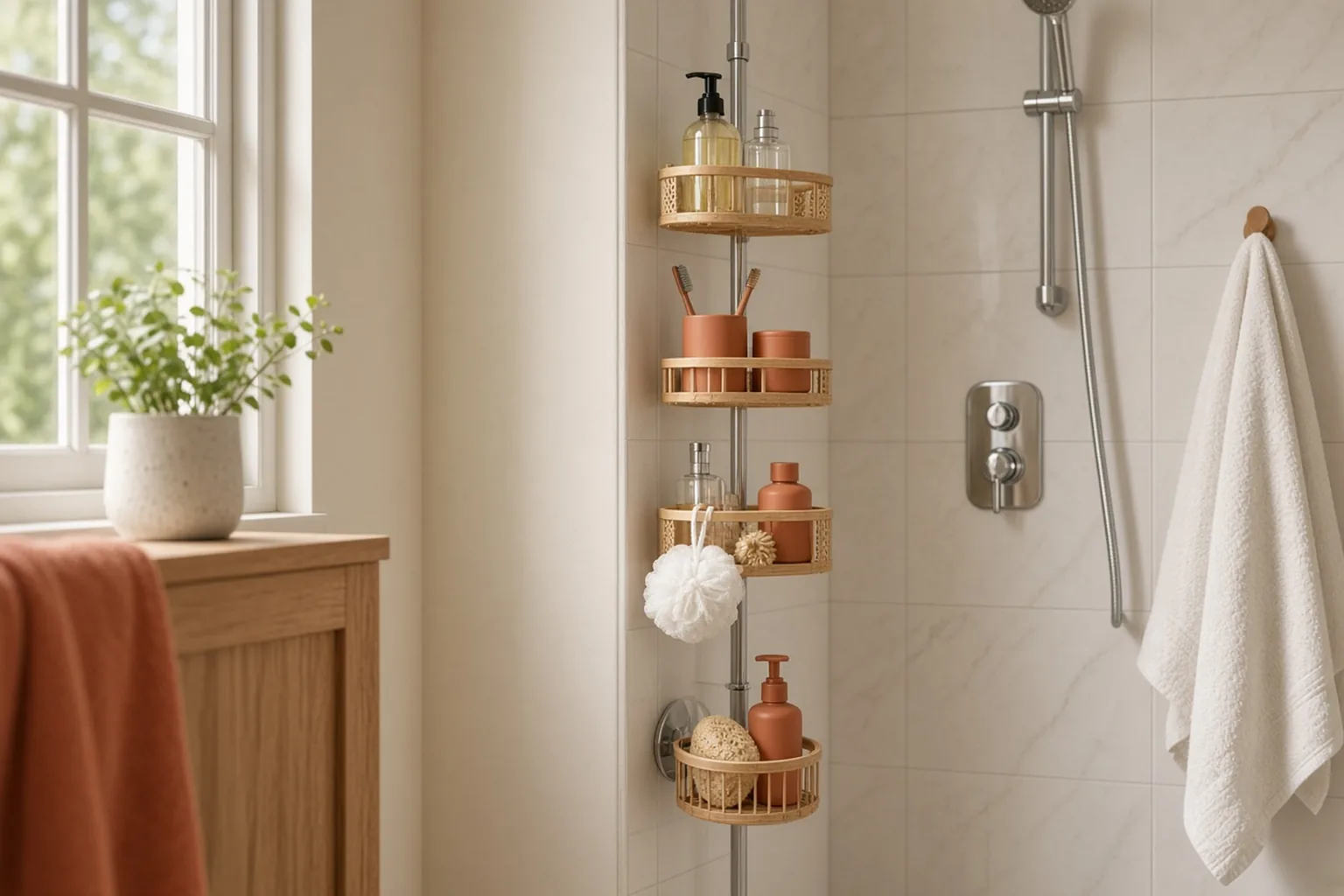
- Pros: A tension pole caddy stands between the shower floor and ceiling, with adjustable shelves attached along the pole.
- Pros: Installs without tools and adjusts to the exact width, ideal for renters.
- Con: Slips under heavy loads or on textured walls; keep the weight modest and measure wall-to-wall.
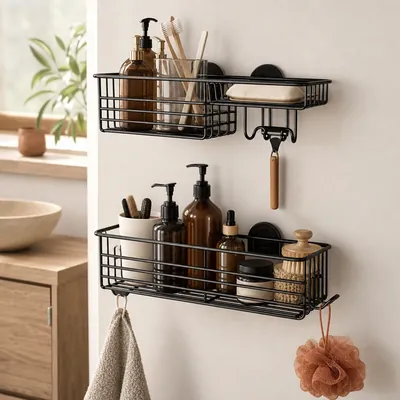
Suction shower caddies
- Pros: Suction caddies attach directly to the shower wall and keep storage close to the surface.
- Pros: No holes in the wall: peel, stick and use it the next day.
- Con: Only holds on clean, smooth, dry surfaces and light loads; cure it 24 hours before loading.
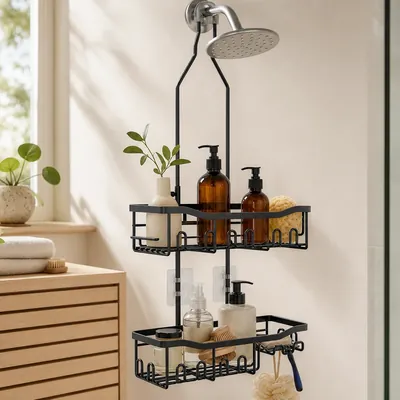
Hanging shower caddies
- Pros: A hanging caddy rests from the showerhead, a rod, or another existing support.
- Pros: Bottles off the tub edge and out of the puddle.
- Con: Choose rust-resistant metal or plastic; suction versions need smooth tile.
Quick comparison
| Option | Best for | Before buying |
|---|---|---|
| Tension Pole Shower Caddy | Best overall | Check fit and load rating |
| Suction shower caddies | Best for flexibility | Check fit and load rating |
| Hanging shower caddies | Best for limited space | Check fit and load rating |
What actually matters when choosing shower caddies
- Surface and installation. Check whether your shower has a smooth, non-porous wall, a usable showerhead, or enough vertical space for a pole. Tile texture, grout lines, and uneven corners can affect how well a caddy stays in place.
- Capacity and shelf shape. Count the products you actually use, then look for shelves that fit their heights and widths. A smaller layout that prevents bottle pileups is often more useful than maximum capacity.
- Drainage and cleaning. Open shelves, slots, or perforations allow water to escape and make soap scum easier to manage. Avoid designs with deep, enclosed pockets unless you are willing to clean them regularly.
- Stability and access. Loaded shelves should not swing, sag, or block the controls. Consider how easily you can reach each tier with wet hands, especially if children or anyone with limited mobility will use the shower.
Our take
Start with the shower itself. If you have a stable corner, adequate height, and several items to organize, a tension pole is often the most flexible first option. If your wall is genuinely smooth and you need only a compact amount of storage, suction can keep the floor and showerhead area clear; just treat the mounting surface and weight limit seriously. Choose a hanging caddy when removability matters most or when the other attachment methods do not suit your bathroom. If you only buy one thing, choose a caddy with open drainage, a realistic load for your routine, and a mounting method matched to your surfaces—not the one with the most shelves on the box.
FAQ
What should I measure before buying?
Measure the usable width, depth, height, clearance, and the load the organizer must carry before ordering.
Which option is best for a small space?
Choose the product that solves the main bottleneck while leaving doors, walkways, and everyday access clear.
How do I avoid a return?
Check assembled dimensions, installation requirements, weight limits, and the retailer return policy before buying.
Keep reading
Related guides
Bathroom
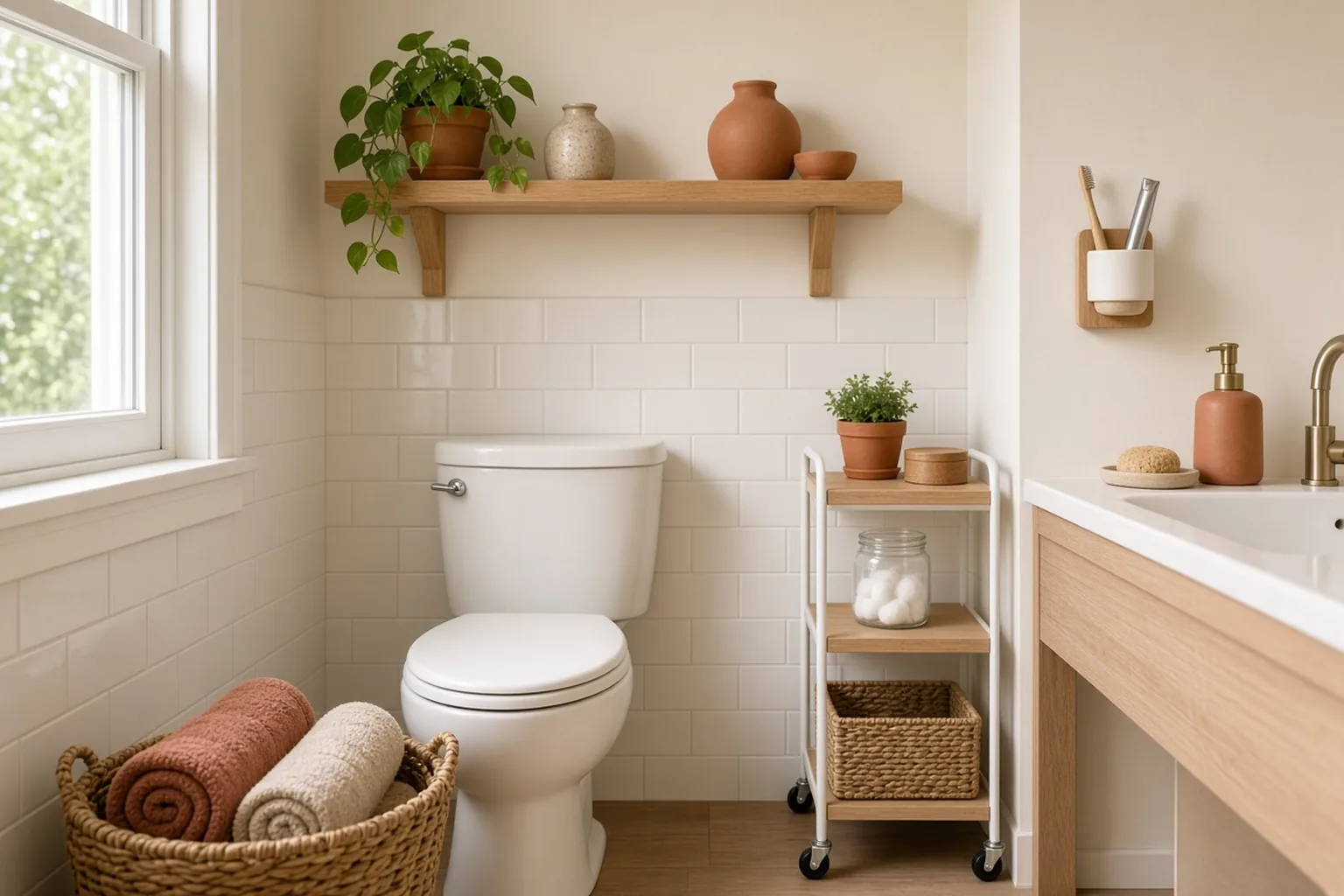
Small Bathroom Organization Ideas That Don't Require Renovation
Practical small bathroom organization ideas and buying criteria for adding storage without renovation or permanent changes.
Bathroom
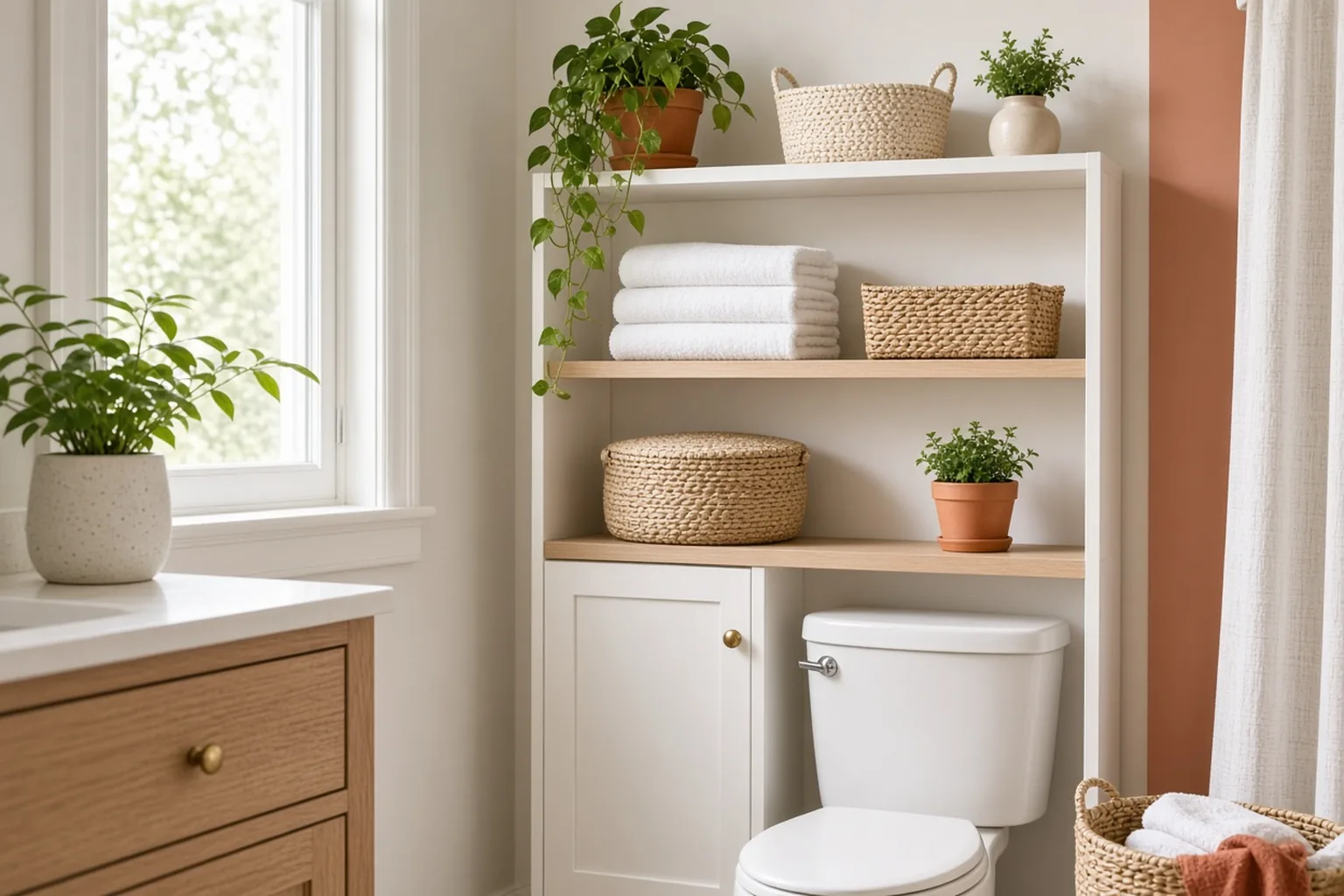
Best Over-the-Toilet Storage Units
A practical guide to choosing over-the-toilet storage units by fit, stability, moisture resistance, and everyday bathroom use.

Bathroom
Best Storage Ideas for Small Bathrooms
Organize a small bathroom with smart zones, vertical storage, under-sink solutions, and moisture-aware product choices.