Closet · New Year guide
Winter Clothes Storage Small Closet: No Vacuum Bags Needed
Store winter clothes in a small closet without vacuum bags. A New Year reset, smart folding, and breathable storage that protects knits and coats.
Updated November 2026
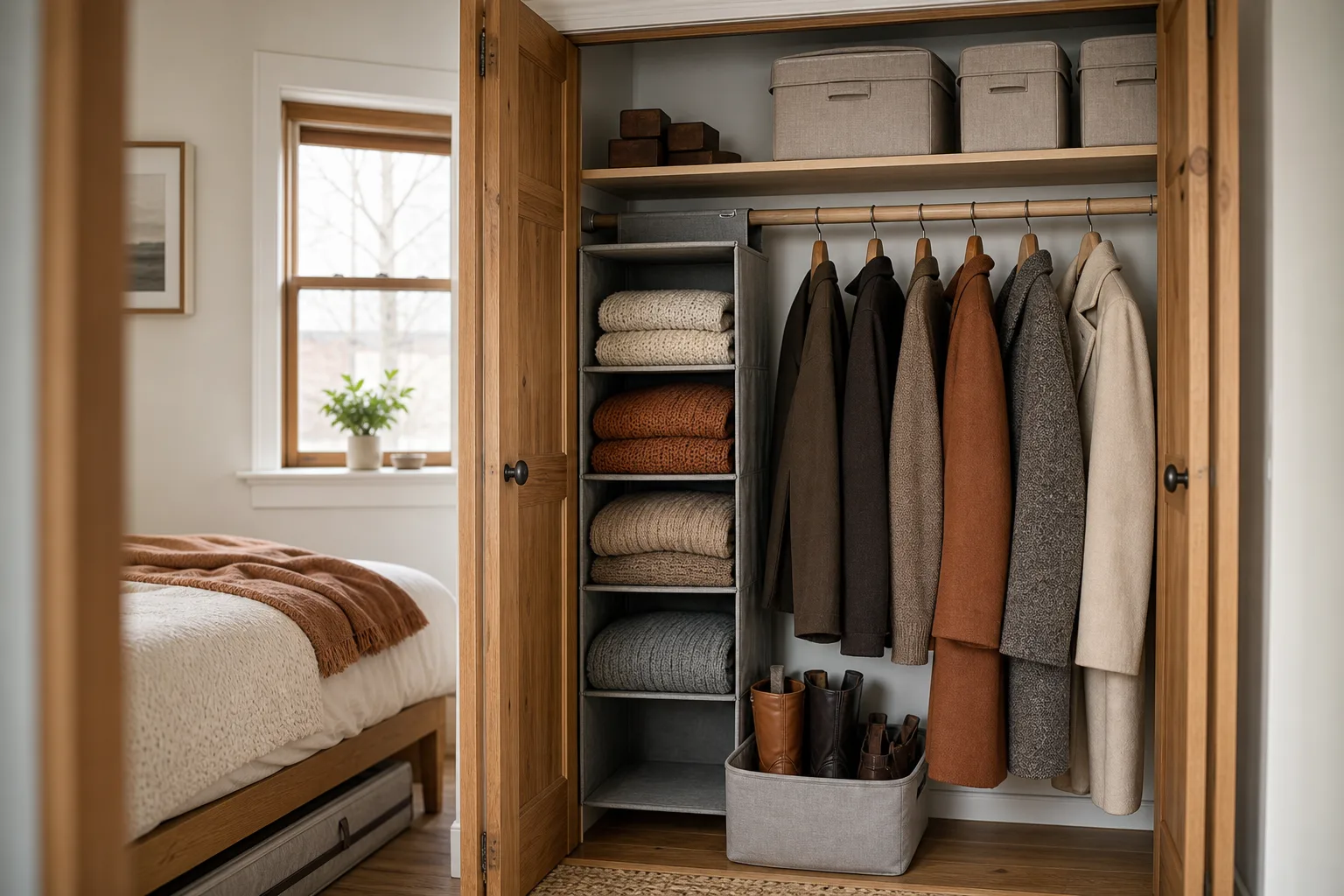
Quick answer: To store winter clothes in a small closet without vacuum bags, start with a New Year edit. Keep the pieces you wear every week within easy reach, and move the occasional ones, like holiday sweaters and ski layers, into breathable fabric bins and under-bed bags. Fold heavy knits, roll light layers, hang structured coats on wide hangers, and add cedar to keep moths away.
Top picks at a glance
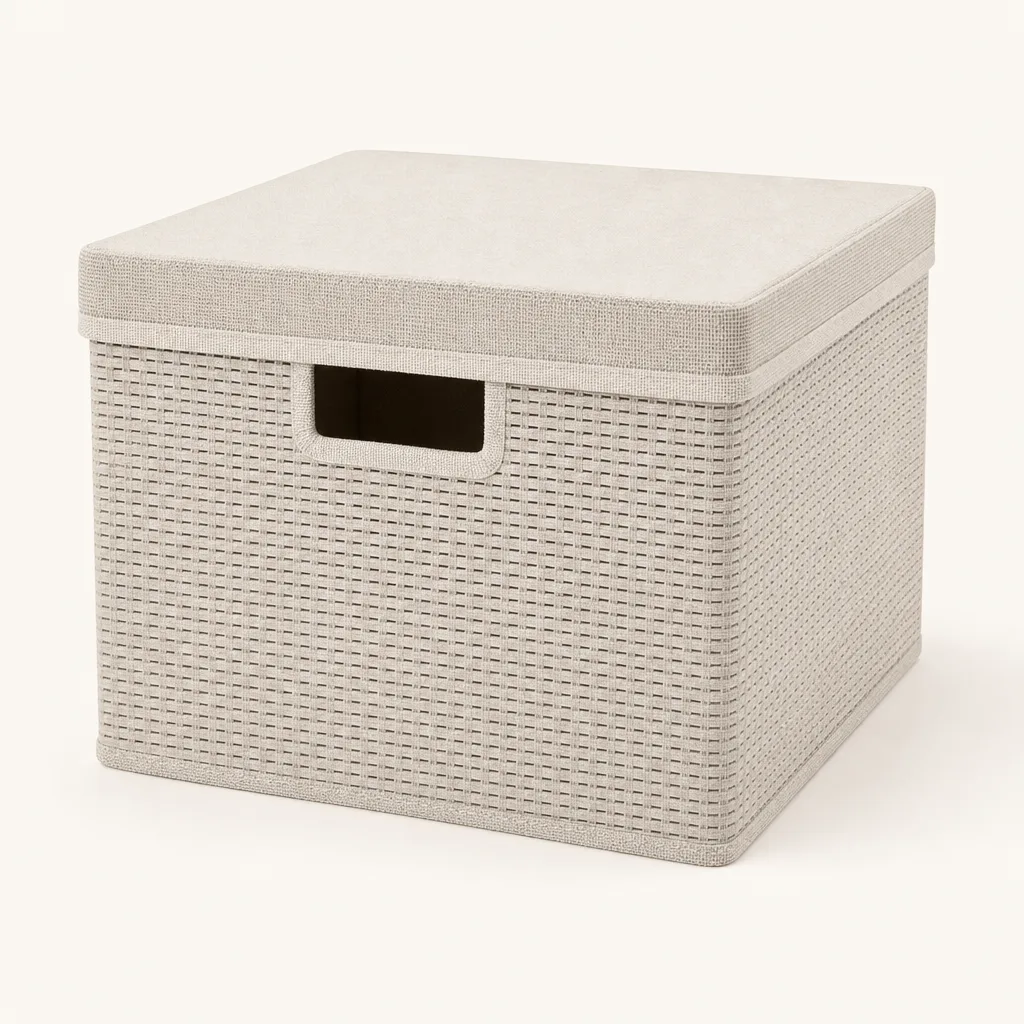
Lidded breathable fabric storage bins
- Pros: The breathable fabric lets wool and down keep their loft, and the lid keeps dust off pieces stored on a high shelf for months.
- Con: They don't compress clothing at all, so a bin of puffers takes up its full size on the shelf.
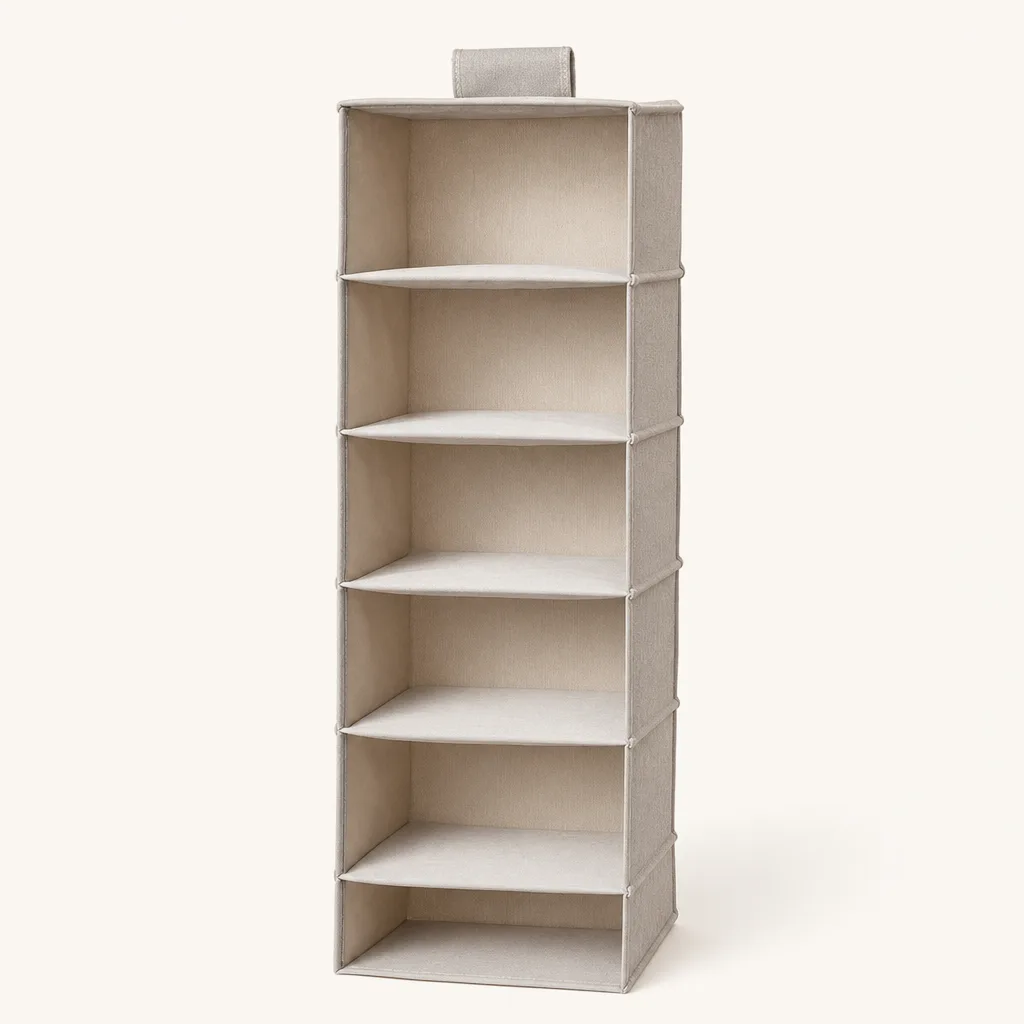
Hanging fabric closet shelf organizer
- Pros: It turns a short stretch of closet rod into cubbies, so folded sweater stacks stay separate and don't topple.
- Con: It takes rod space away from hanging coats, and the shelves can sag if you load them with very heavy knits.

Cedar blocks and hang-up rings
- Pros: They help keep moths away from stored wool without strong chemical smells, and they fit easily into bins, bags, and hangers.
- Con: The scent fades within a few months, so you have to sand or replace them to keep them working.
Quick comparison
| Option | Why it works in a small home | Before you buy |
|---|---|---|
| Lidded breathable fabric storage bins | The breathable fabric lets wool and down keep their loft, and the lid keeps dust off pieces stored on a high… | They don't compress clothing at all, so a bin of puffers takes up its full size on the shelf. |
| Hanging fabric closet shelf organizer | It turns a short stretch of closet rod into cubbies, so folded sweater stacks stay separate and don't topple. | It takes rod space away from hanging coats, and the shelves can sag if you load them with very heavy knits. |
| Cedar blocks and hang-up rings | They help keep moths away from stored wool without strong chemical smells, and they fit easily into bins… | The scent fades within a few months, so you have to sand or replace them to keep them working. |
Why skip vacuum bags for winter clothes
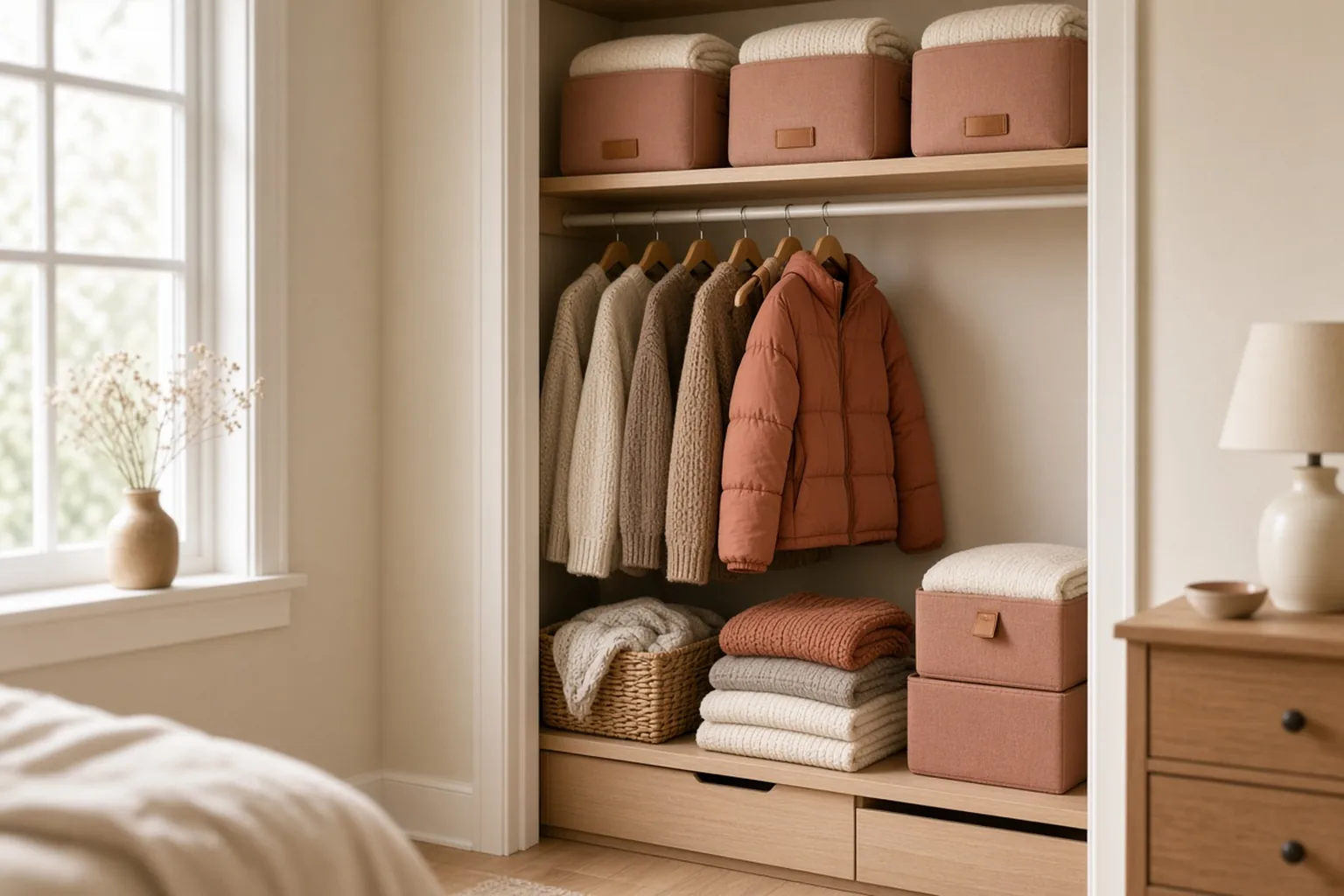
Vacuum bags promise to shrink a pile of sweaters to a flat sheet, but they come with tradeoffs that matter in a small home. Compressing wool, down, and fleece for months can flatten the loft that keeps you warm, and deep creases in coats and knits don't always relax. Many bags also lose their seal over time and slowly puff back up, taking back the space you thought you saved. Plastic traps any leftover moisture, which is a real concern in apartments with poor airflow. Breathable storage lets fabric rest naturally, and you can grab one sweater without unzipping and resealing a whole bag. You give up some compression, but your clothes come out ready to wear, and the storage is easy to open on a busy weekday morning.
Start the New Year with a quick closet edit
January is a good time to reset, because you've just worn most of your winter wardrobe and know which pieces earned their spot. Pull everything out and sort it into three groups: what you reach for every week, what you wear only sometimes (like holiday sweaters or ski layers), and what you didn't touch at all. The weekly pieces stay in the closet at eye level. The occasional pieces go into breathable storage nearby. The untouched pile is your chance to donate or pass things along before they take up space for another year. Wash or dry clean anything you plan to store, because body oils and food traces attract moths. Check the pockets, close the zippers, and empty the hoods. This short edit often frees more room than any product, and it makes the rest of the plan much easier. Our closet organization guides cover more ways to sort quickly.
Fold, roll, or hang: what each winter piece needs
Different winter clothes need different storage. Heavy knit sweaters stretch on hangers, so fold them and keep stacks to three or four high so the bottom layer doesn't get crushed. Lighter knits, thermal layers, and fleece can be rolled, which fits neatly into bins and lets you see every piece at a glance. Wool coats and structured jackets keep their shape best on sturdy, wide-shouldered hangers with a little space on either side. Puffer jackets do fine folded loosely in a large breathable bin, as long as nothing heavy sits on top. Scarves, hats, and gloves get lost easily, so give them their own small lidded box or labeled bag. When the storage method fits the fabric, your clothes stay in good shape and the closet doesn't turn into one tangled pile.
Use the hidden space around a small closet
Small closets usually have more usable space than it seems; it's just in awkward spots. The upper shelf is ideal for lidded fabric bins holding the occasional pieces you sorted out in January. Put a clear label on the front of each bin so you don't have to pull every one down. A hanging fabric shelf organizer turns part of the rod into cubbies for folded sweaters, which keeps stacks from toppling. The closet floor can hold a low bin or two for boots and bulky knits. Outside the closet, the space under the bed works well for flat zippered bags with breathable panels, especially for extra blankets and ski gear. The back of the door can take hooks or an over-door rack for hats and scarves. Tuck cedar blocks or lavender sachets into each spot to discourage moths without strong chemical smells.
Our take
Most small homes don't need vacuum bags to fit a winter wardrobe. Start with a quick New Year edit, then store each type of clothing in the way that suits it: fold heavy knits, roll light layers, and hang structured coats with room to breathe. Breathable bins on the top shelf and flat bags under the bed handle the occasional pieces, while a hanging shelf organizer keeps everyday sweaters tidy and easy to reach. Add cedar to keep moths away, and refresh it when the scent fades. This approach takes a little more space than compression, but your clothes come out in better shape, and you can find what you need in seconds. For more ideas for tight spaces, browse our closet hub.
FAQ
Can I store wool sweaters in plastic bins instead of vacuum bags?
You can for short periods if the sweaters are clean and completely dry, but breathable fabric bins are safer over months because they don't trap moisture.
Should winter coats be folded or hung in a small closet?
Hang wool and structured coats on wide-shouldered hangers so they keep their shape, and fold puffer jackets loosely into a large breathable bin if rod space is tight.
How do I keep moths away from stored winter clothes?
Wash or clean everything before storing it, keep it in closed breathable containers, and add cedar or lavender, refreshing the cedar every few months.
Keep reading
Related guides
Closet
Christmas Gift Ideas for Home Organization (2026 Guide)
Practical Christmas gift ideas for home organization in small homes: drawer dividers, over-door racks and label makers that actually get used.

Closet
Best Closet Organizer Systems for Small Bedrooms
Compare closet organizer systems for small bedrooms and learn which features, measurements, and layouts make the most sense.
Closet
Best Closet Organizers for Renters: Flexible Systems That Come Down Cleanly
Compare renter-friendly closet organizers, including freestanding racks, tension rods, shelf dividers, and over-the-door storage.