Closet · Field guide
Linen Closet Organization for a Small Home
Organize a small linen closet with shelf dividers, labeled bins for sheet sets, an over-the-door organizer for towels, and vacuum bags for bulky bedding.
Updated September 2026
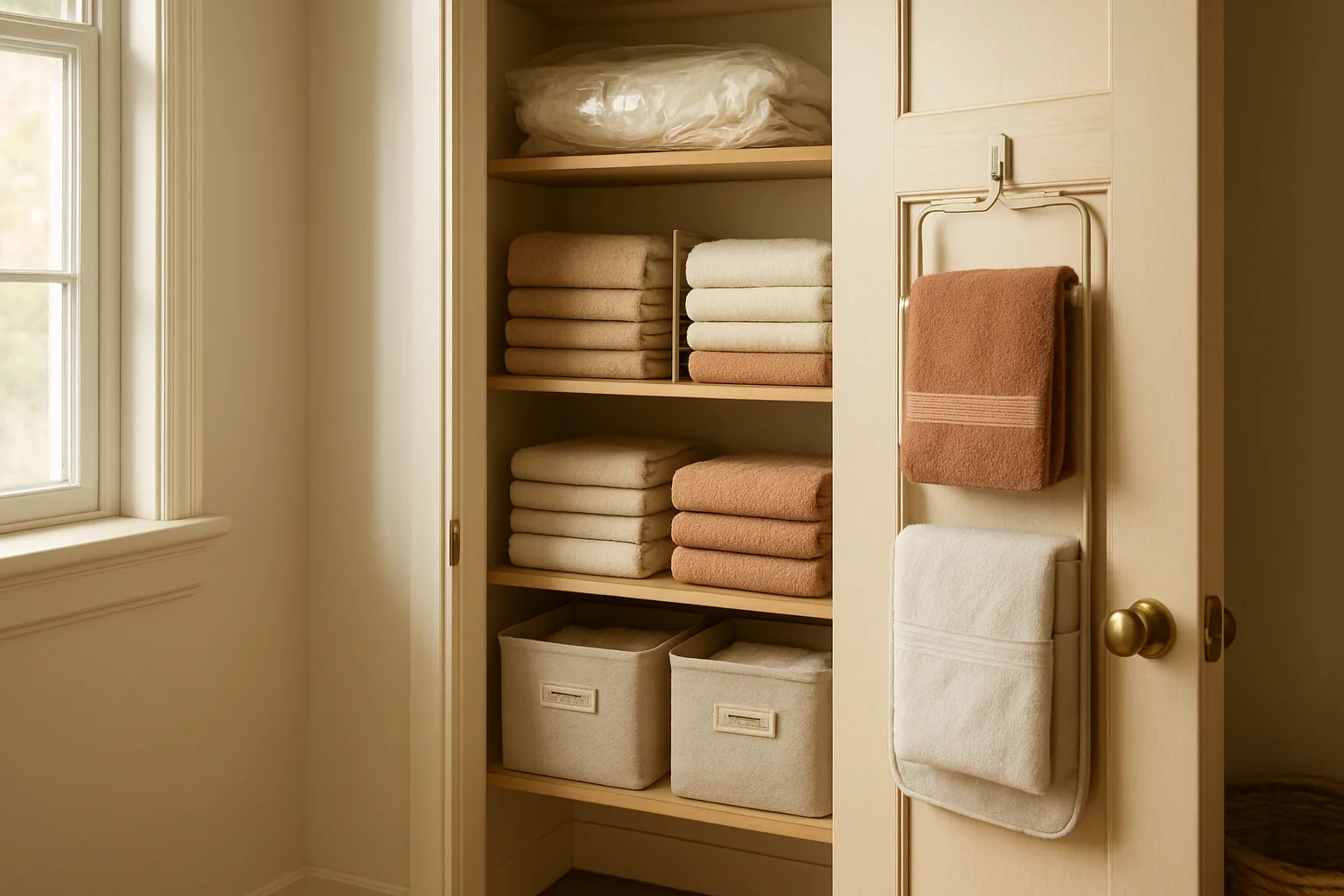
Quick answer: Give every shelf a category, fold sheet sets inside their own pillowcase, use shelf dividers so stacks stop leaning, put small items in labeled bins and move bulky off-season bedding into vacuum bags on the top shelf. Then keep one shelf half empty for the things that come back from the wash.
Top picks at a glance

Shelf dividers
- Pros: Clip onto the shelf and keep stacks of towels and sheets from leaning into each other, so a stack stays a stack.
- Con: Only fit shelves up to about an inch thick; measure the shelf edge before ordering.
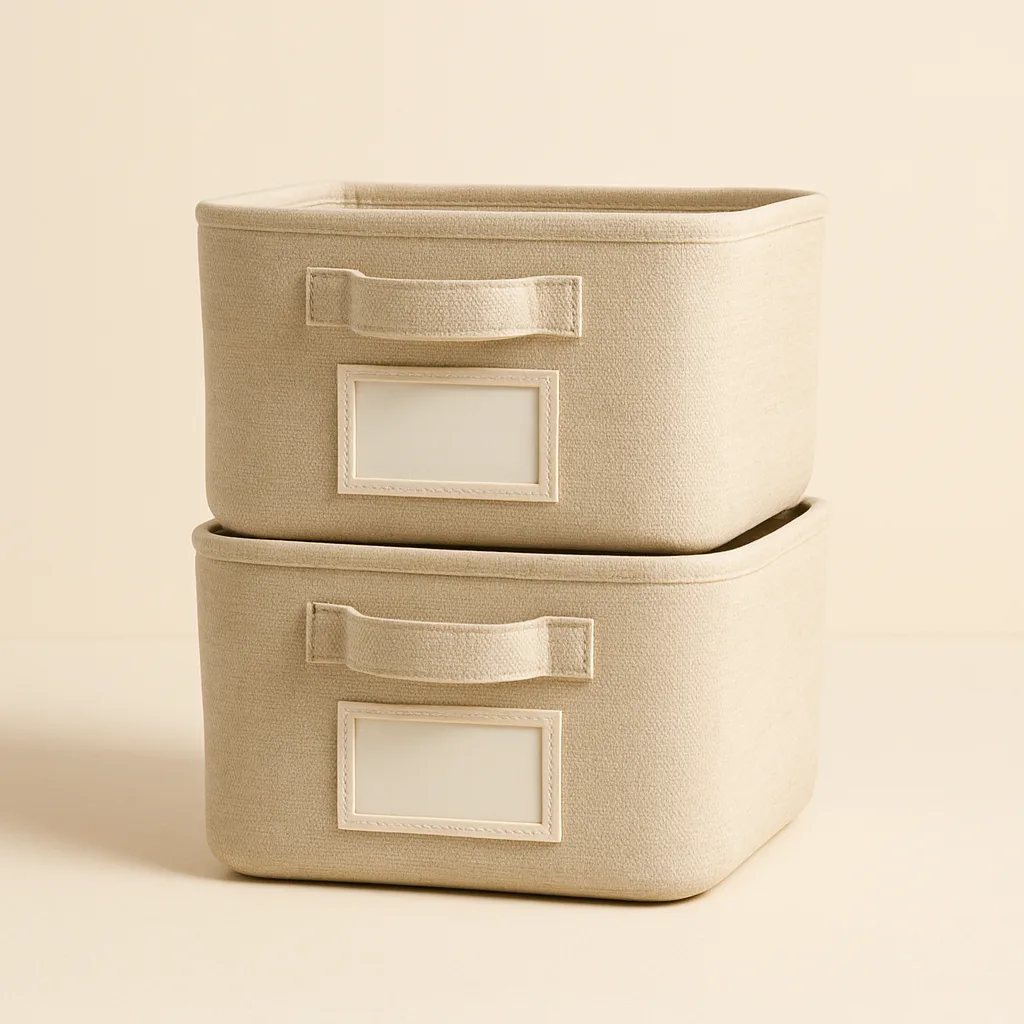
Fabric storage bins with labels
- Pros: One bin per bed size holds the complete sheet sets; the label ends the guessing game about which fitted sheet goes where.
- Con: Bins add height: check the space between shelves so the lid or the handle still clears.
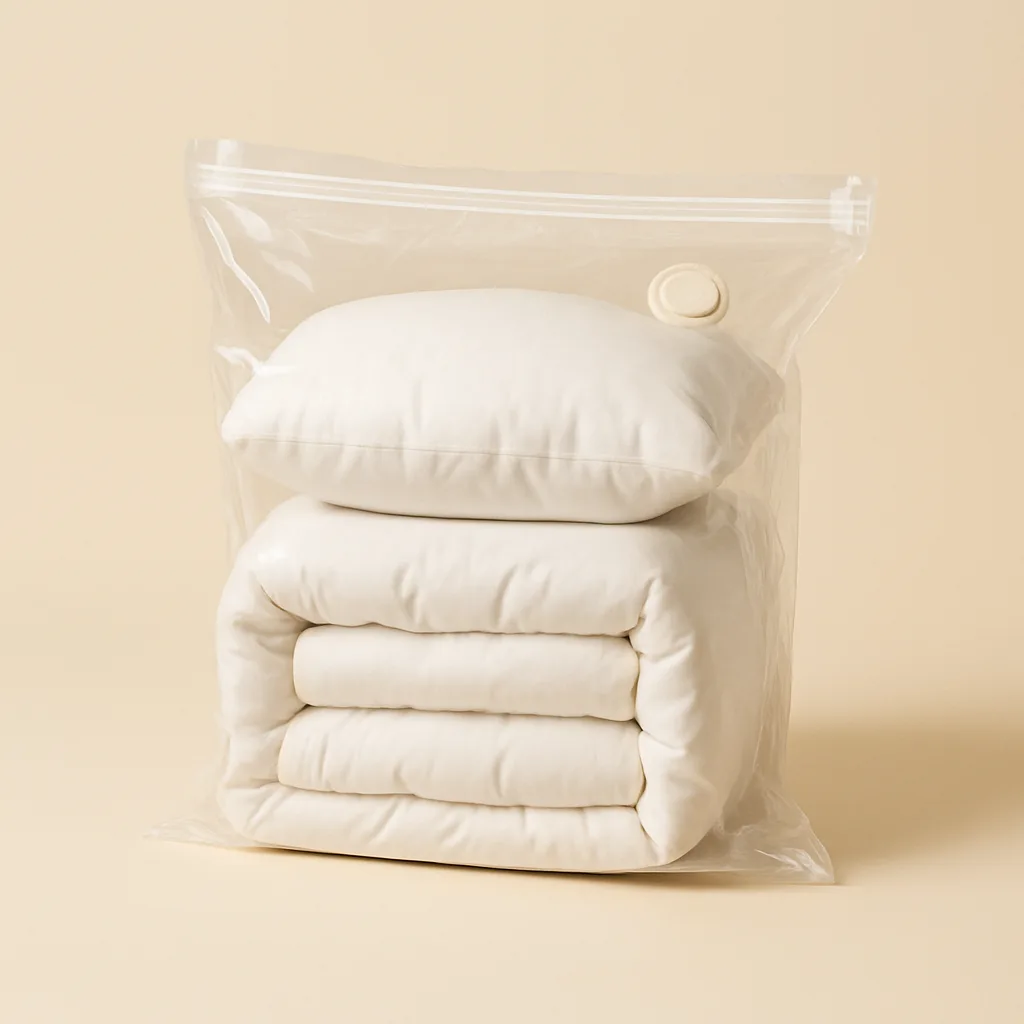
Vacuum storage bags for bedding
- Pros: Compress the winter comforter and the guest pillows to a third of their size and store them flat on the top shelf.
- Con: Not for down long-term; re-seal every few months and let items air out before use.
Assign the shelves by how often you reach
Eye level is for the things you touch weekly: bath towels and the current sheet sets. Below that, guest bedding and beach towels. The top shelf is for the once-a-year items in vacuum bags, and the floor is for the bulky things in a bin: the heating pad, the humidifier, the extra blanket. A linen closet fails when the everyday items are behind the rare ones.
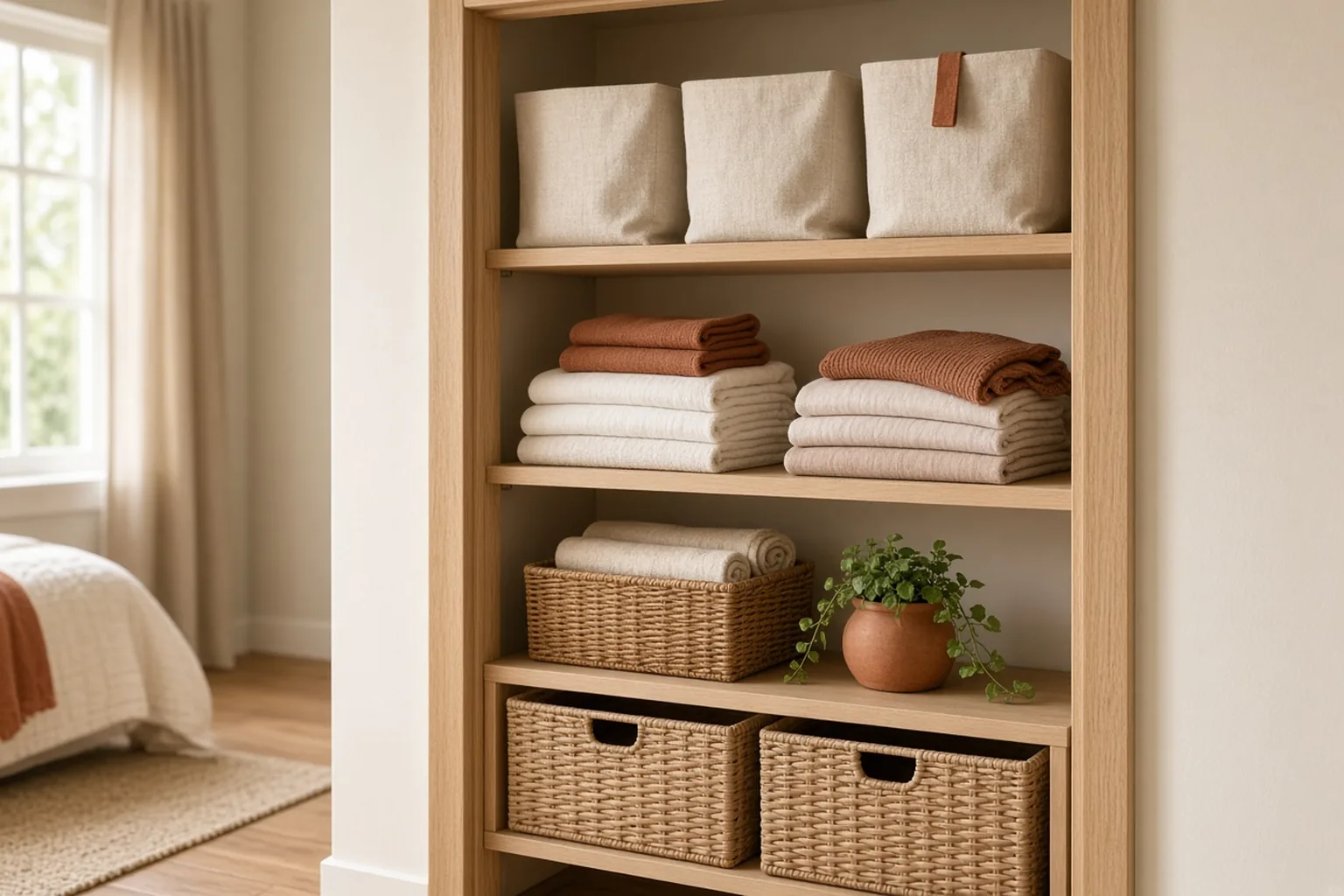
Fold sets into their pillowcase
A sheet set folded into one of its own pillowcases becomes a single package that stacks and never separates. Store them by bed size in a labeled bin; one bin per bed means anyone in the house can find the right set without unfolding anything.
Dividers and bins do the maintenance
Stacks of towels lean and topple; a shelf divider every 12 inches keeps them upright, and a labeled bin for small items (washcloths, pillow protectors, spare shower curtain rings) means the shelf never becomes a drawer. Use the back of the door for an organizer with pockets for the guest toiletries.
Rotate the seasons
Twice a year, swap the top shelf: the winter comforter goes into a vacuum bag in October and the light quilt comes down. Add a lavender sachet or cedar block to the bags; it keeps the closet smelling clean and the moths out.
Our take
The linen closet is the easiest closet in the house to fix because the categories are obvious. Dividers, one bin per bed size, an over-the-door organizer and two vacuum bags: an afternoon and it stays that way.
FAQ
How many sheet sets should I keep per bed?
Two per bed, three for a child's bed. More than that is what overflows the closet; donate the odd sets that no longer match a mattress you own.
What can I use if I do not have a linen closet?
A labeled bin per bed under each bed, towels on a shelf in the bathroom or in a basket, and vacuum bags for bedding on the top shelf of the bedroom closet.
How do I stop towels from smelling musty in the closet?
Make sure they are fully dry before folding, leave a small gap between stacks for air, and keep a moisture absorber on the bottom shelf in humid climates.
Keep reading
Related guides
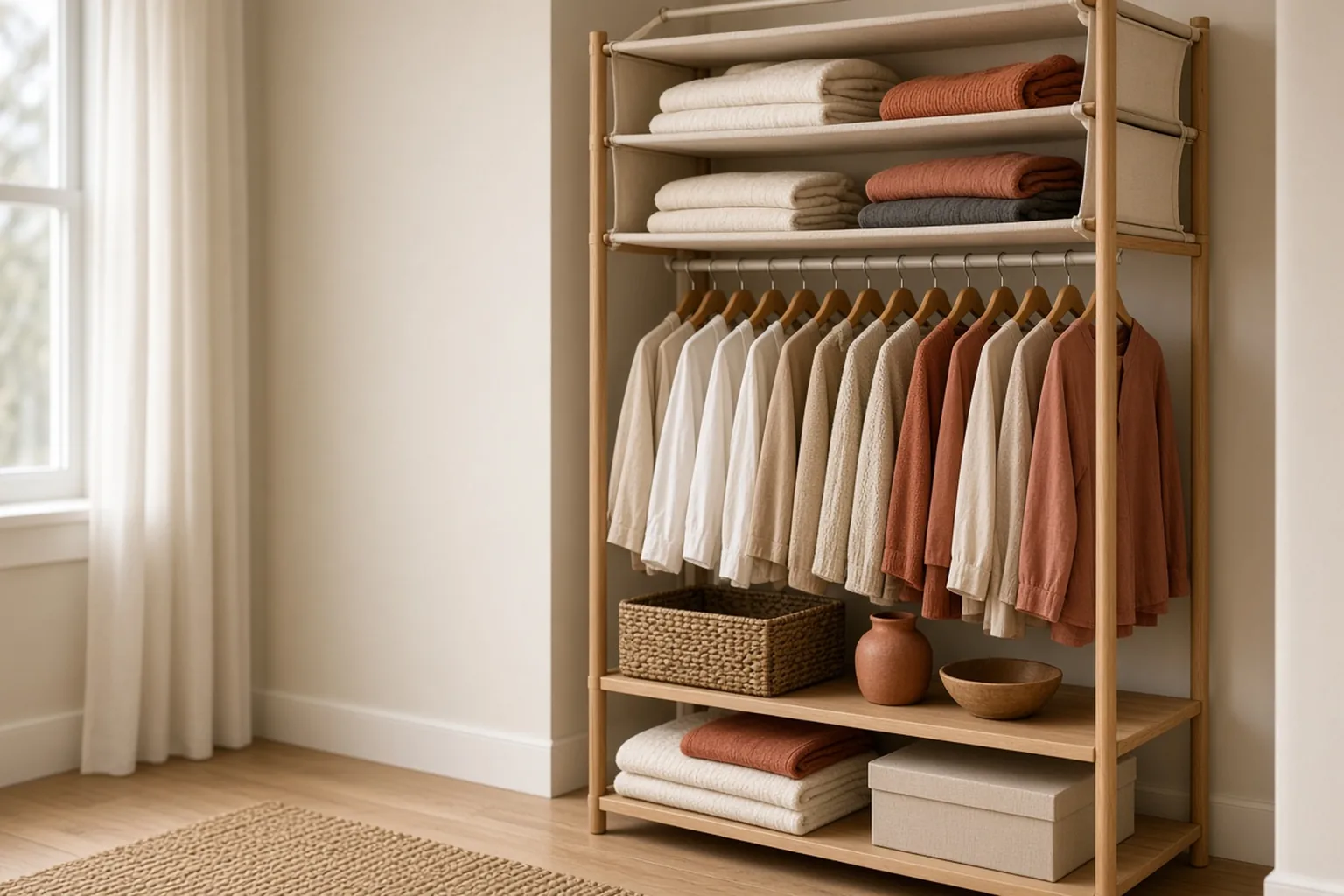
Closet
Best Closet Organizers for Renters: Flexible Systems That Come Down Cleanly
Compare renter-friendly closet organizers, including freestanding racks, tension rods, shelf dividers, and over-the-door storage.
Closet
Gift Ideas for People Who Love an Organized Home
Practical, well-made organization gifts for Black Friday and the holidays: things people actually use every week, not novelty gadgets.
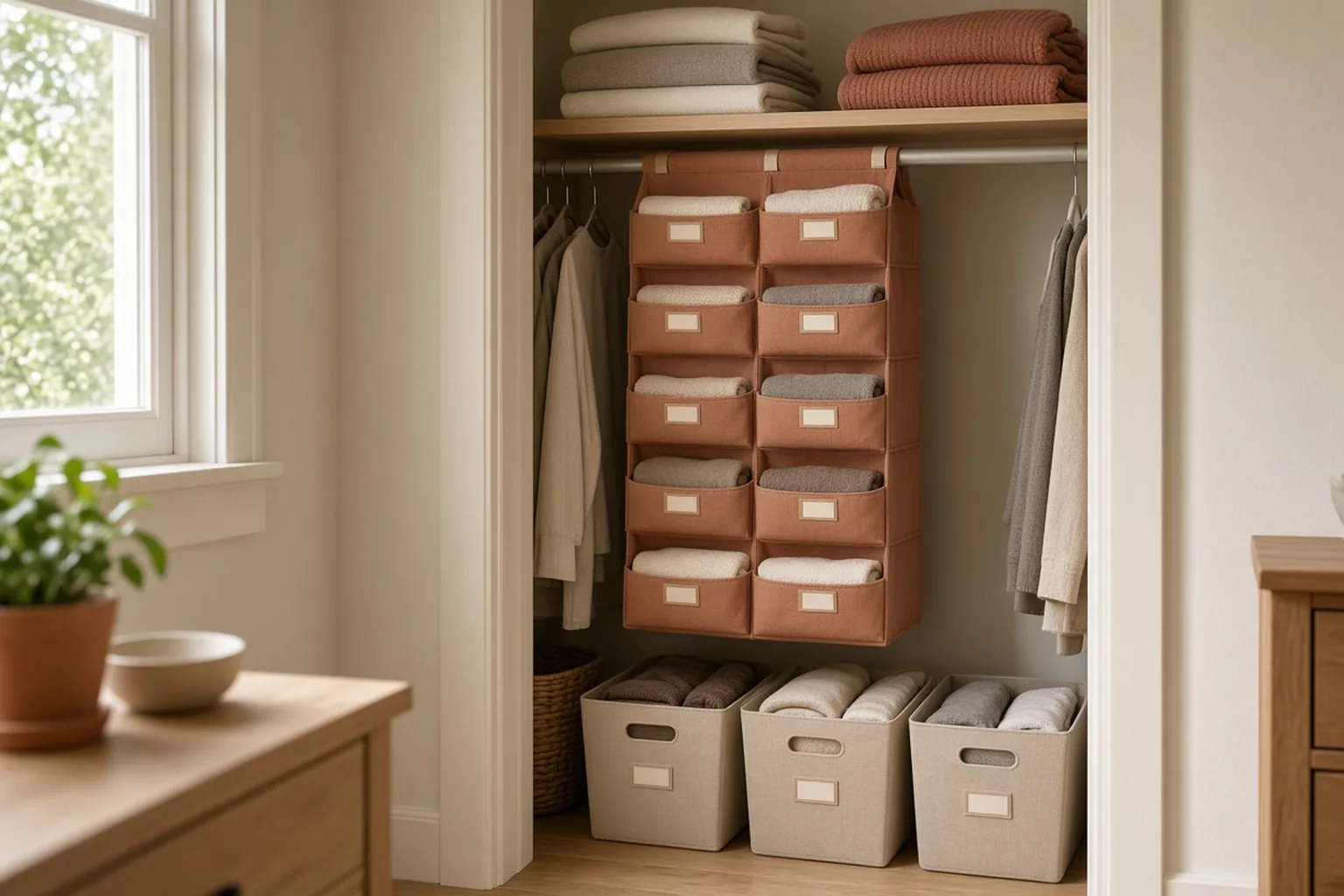
Closet
How to Organize a Small Closet Without Remodeling
Organize a small closet without construction using a simple edit, better zones, vertical storage, and renter-friendly organizers.