Spice Rack Organization: Wall, Drawer or Cabinet?
Updated September 2026
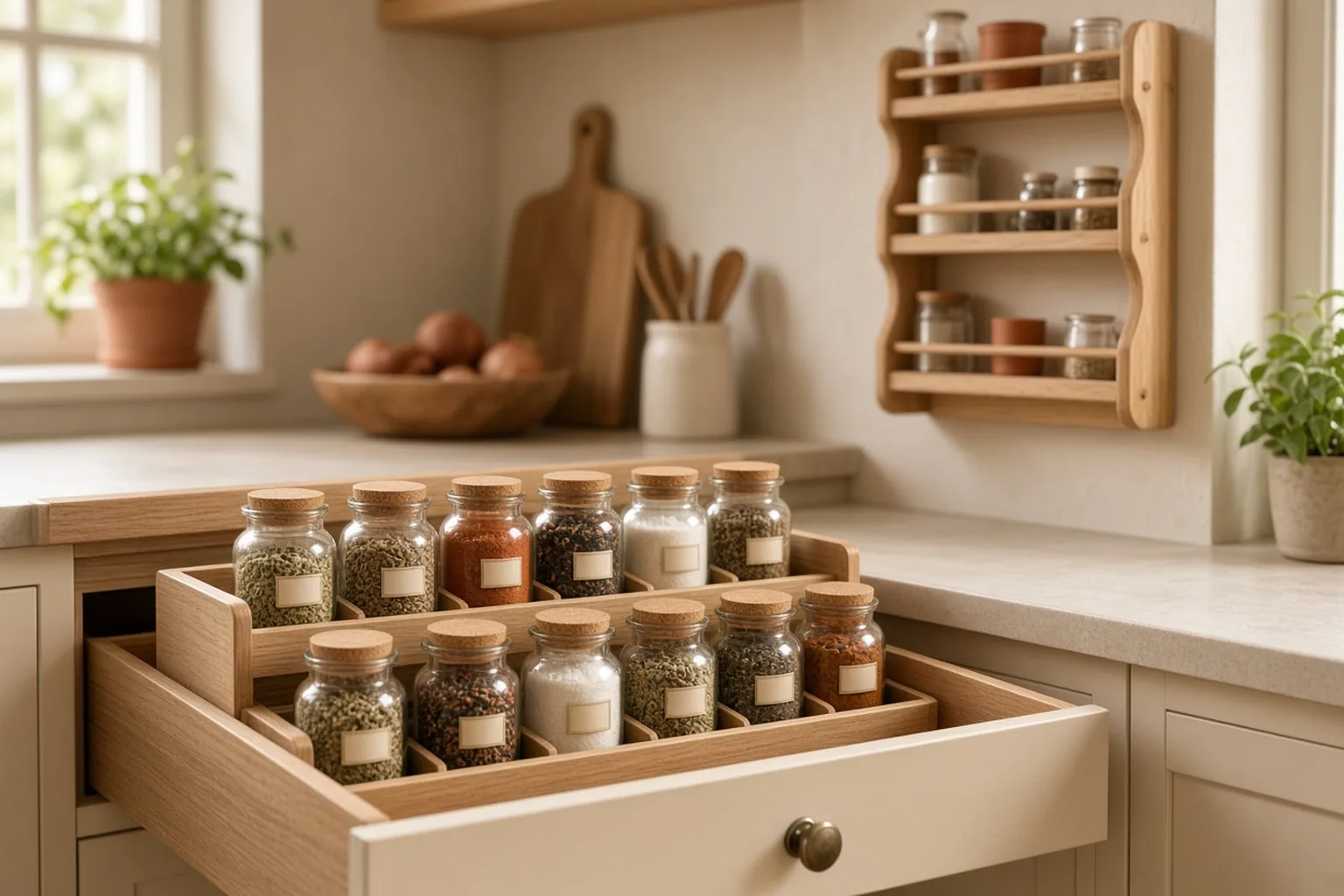
Quick answer: Spices are small, numerous and surprisingly easy to lose in a kitchen cabinet. A jar that is out of sight is often out of mind, while a crowded shelf can make cooking feel like a daily search task.
Top picks at a glance
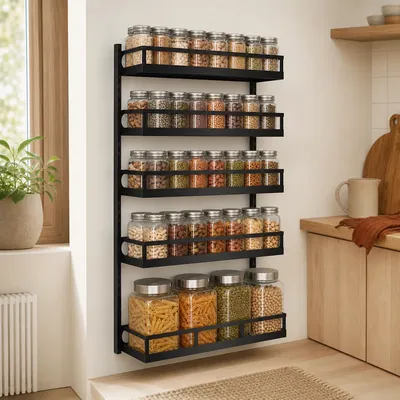
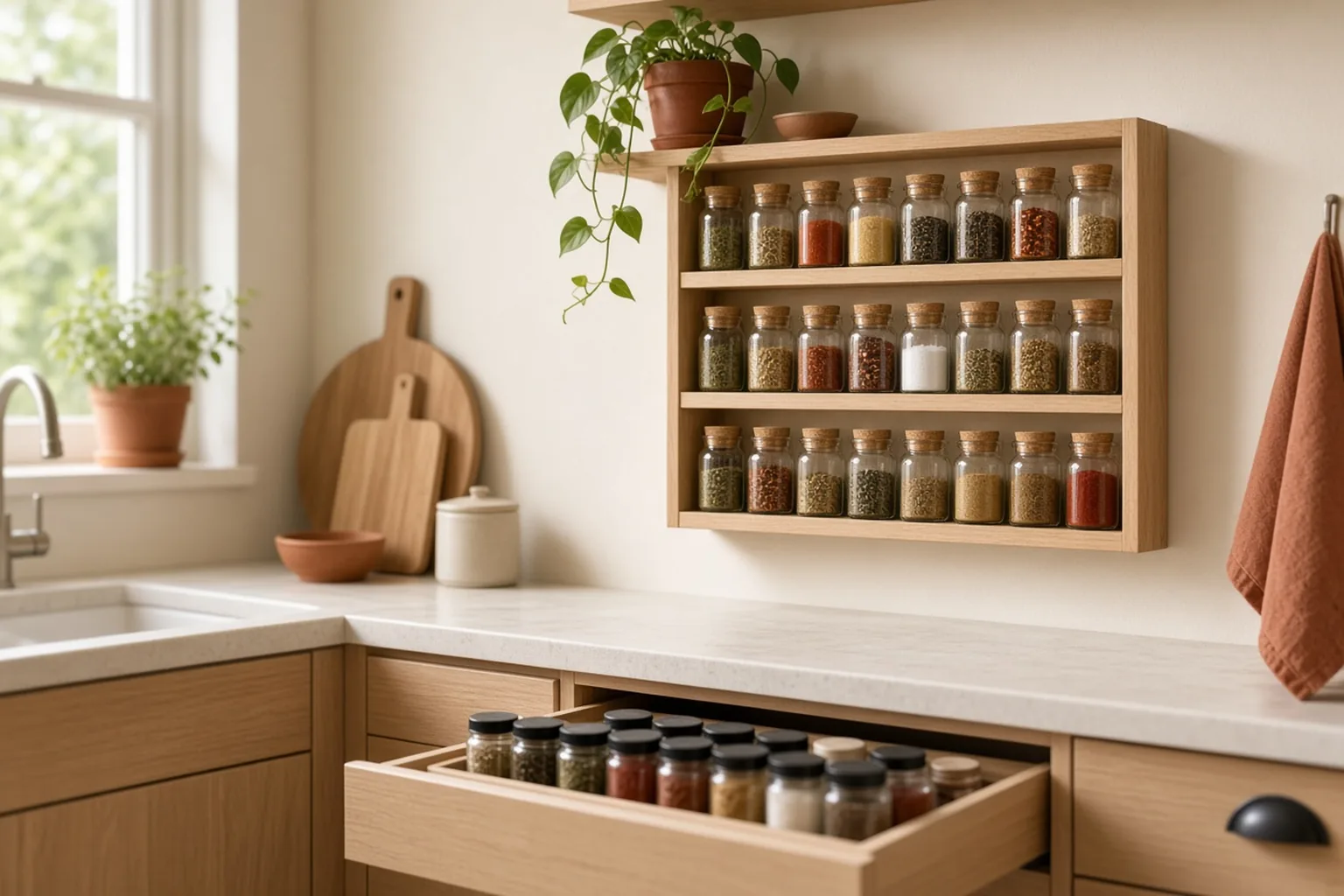
Wall Mounted Spice Rack
- Pros: Wall-mounted racks make sense when cabinet and drawer space is limited and you have a convenient, low-humidity wall near the preparation area.
- Pros: Labels face you, so cooking stops being a search; nothing gets bought twice.
- Con: Jar diameter matters: many racks fit only standard 2-inch jars.
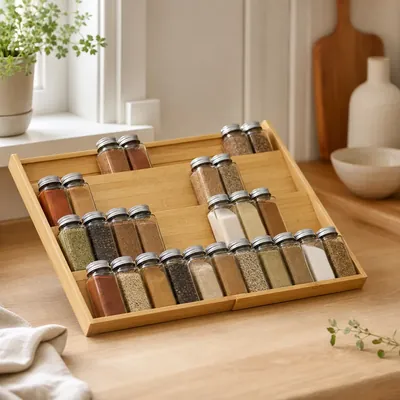
Spice drawer inserts
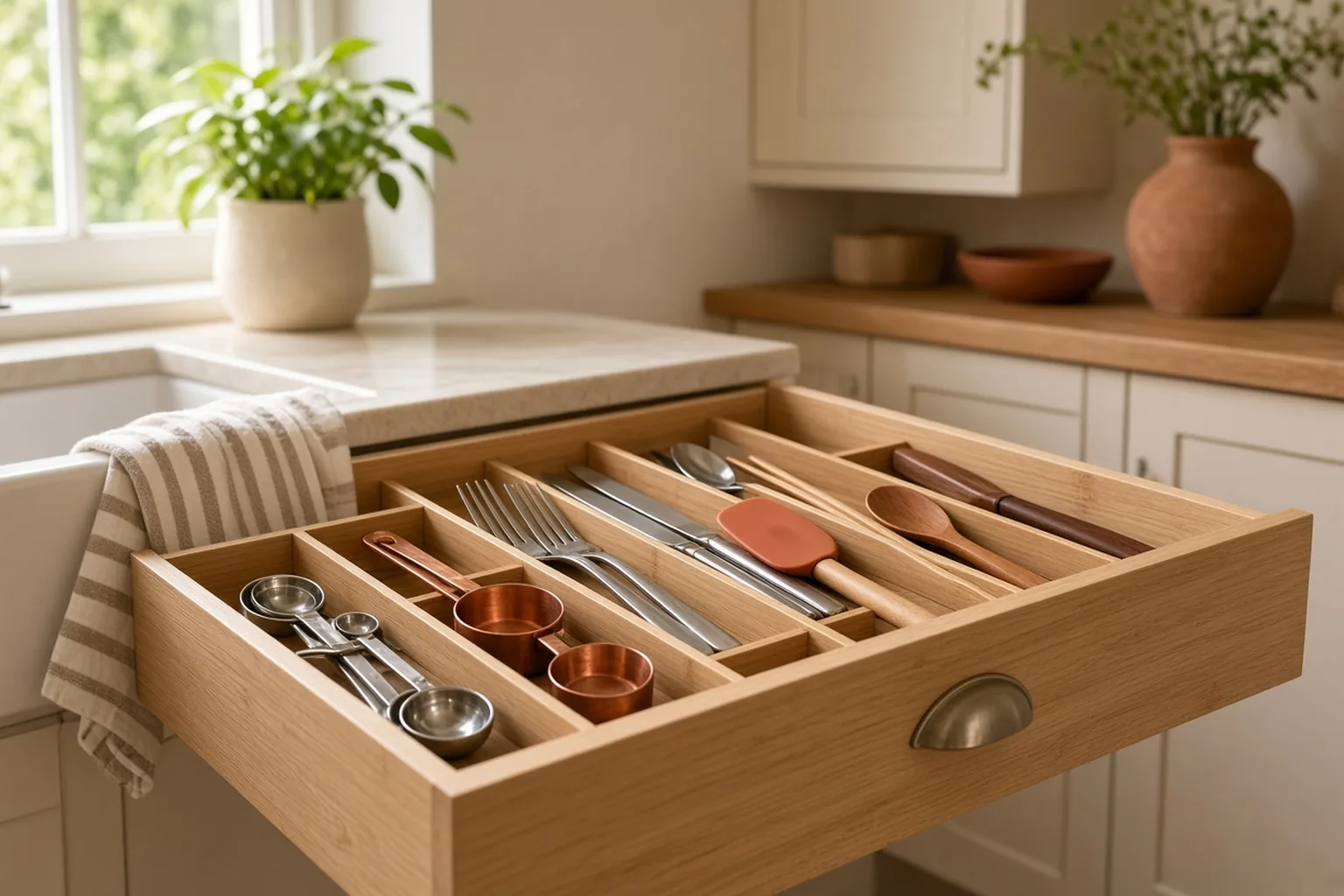
- Pros: A drawer insert is a strong choice for cooks who want every label visible from above without adding anything to the walls.
- Pros: Labels face you, so cooking stops being a search; nothing gets bought twice.
- Con: Jar diameter matters: many racks fit only standard 2-inch jars.
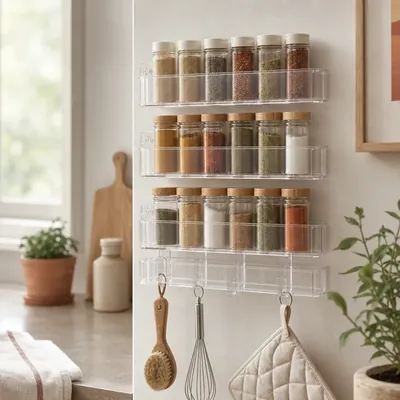
Cabinet-door and pull-out organizers
- Pros: Cabinet-based organizers are useful when you want spices hidden but still close at hand.
- Pros: Slides the contents to you, so the deep back of the cabinet or drawer is finally usable.
- Con: Needs a level cabinet floor and the right interior width; measure before ordering.
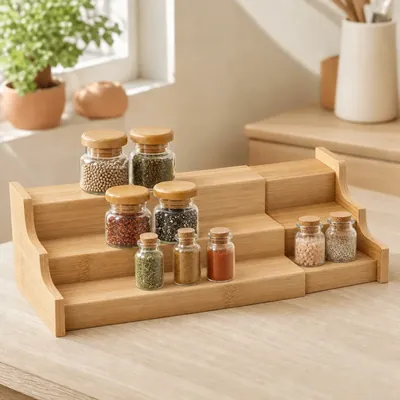
Tiered cabinet shelves
- Pros: Tiered shelves are the simplest way to improve visibility inside a standard cabinet without changing its layout.
- Pros: Doubles the usable height of a shelf and keeps the back row visible.
- Con: Check the shelf spacing above; a riser needs at least 5 to 6 inches of headroom.
Quick comparison
| Option | Best for | Before buying |
|---|---|---|
| Wall Mounted Spice Rack | Best overall | Check fit and load rating |
| Spice drawer inserts | Best for flexibility | Check fit and load rating |
| Cabinet-door and pull-out organizers | Best for limited space | Check fit and load rating |
| Tiered cabinet shelves | Best for comparison | Check fit and load rating |
What actually matters when choosing spice rack organization
- Available space. Measure the cabinet, drawer or wall area, including height and door clearance. A rack that technically fits can still be awkward if it blocks hinges or leaves no room to lift jars out.
- Visibility and access. Consider whether you prefer labels facing up, forward or outward. The right layout should let you identify a spice without moving several others first.
- Capacity and flexibility. Count the jars you actually own and allow room for a few additions. Adjustable shelves or modular pieces can be more useful than a fixed rack if jar sizes vary.
- Cleaning and stability. Look for a surface that can be wiped clean and a design that keeps containers from tipping. Spilled paprika and floury seasoning residue quickly expose hard-to-clean corners.
Our take
Start with the location that already feels most natural when you cook. If you have a spare drawer, an angled insert is often the cleanest way to see labels and keep the counter clear. If drawers are full, try a tiered shelf in a cabinet before committing to wall installation. A wall rack is useful for a small group of daily staples, while a door or pull-out organizer can reclaim awkward cabinet space when measurements work. If you only buy one thing, choose an organizer that matches your existing jar sizes and makes every container reachable. Then group spices by use or cuisine, label the tops or fronts consistently, and leave a little empty space for the next jar.
FAQ
What should I measure before buying?
Measure the usable width, depth, height, clearance, and the load the organizer must carry before ordering.
Which option is best for a small space?
Choose the product that solves the main bottleneck while leaving doors, walkways, and everyday access clear.
How do I avoid a return?
Check assembled dimensions, installation requirements, weight limits, and the retailer return policy before buying.
Keep reading
Related guides
Kitchen
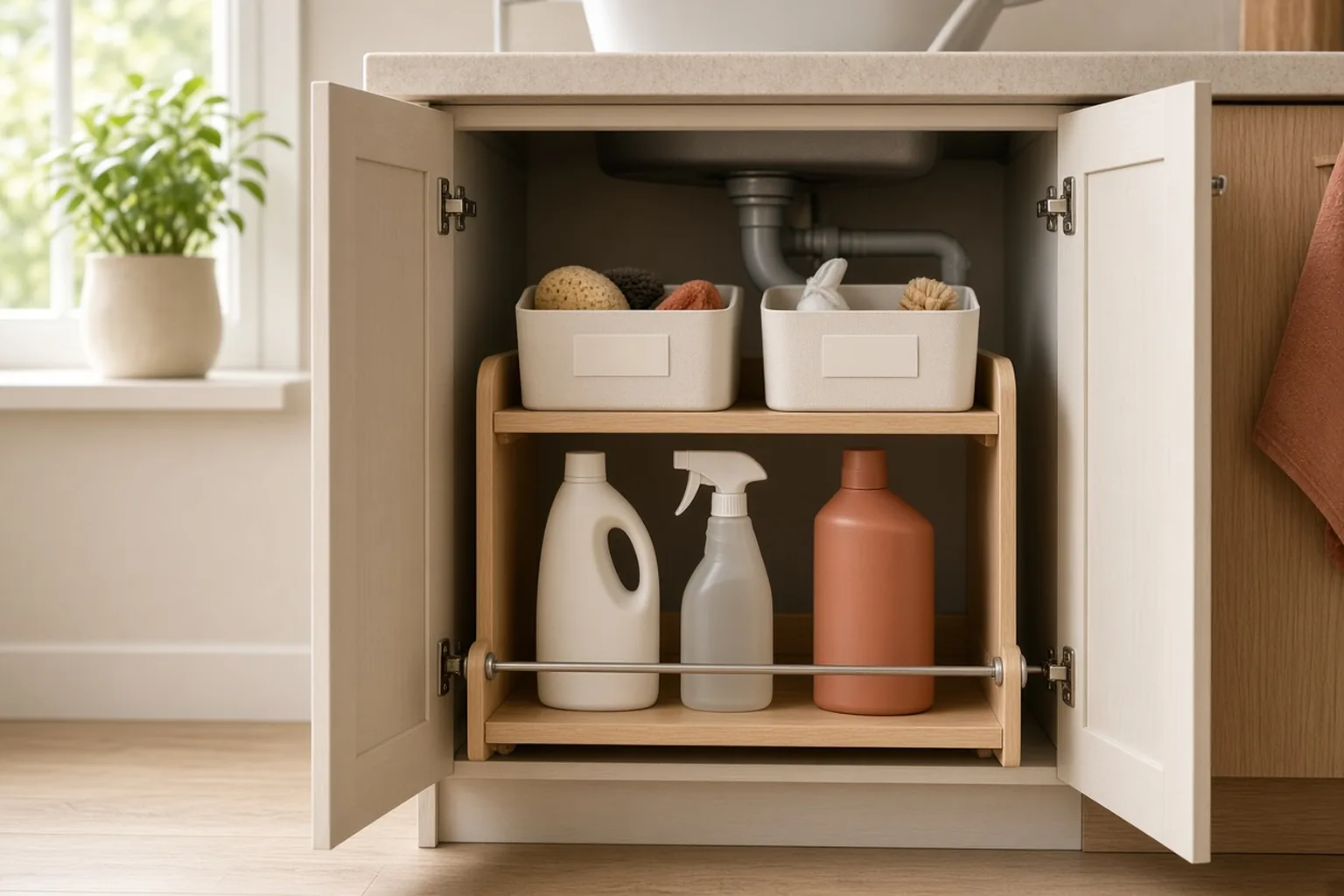
Under-Sink Storage Solutions That Actually Work
Compare under-sink storage types and learn what to measure, avoid, and prioritize for a cleaner, more usable kitchen cabinet.
Kitchen
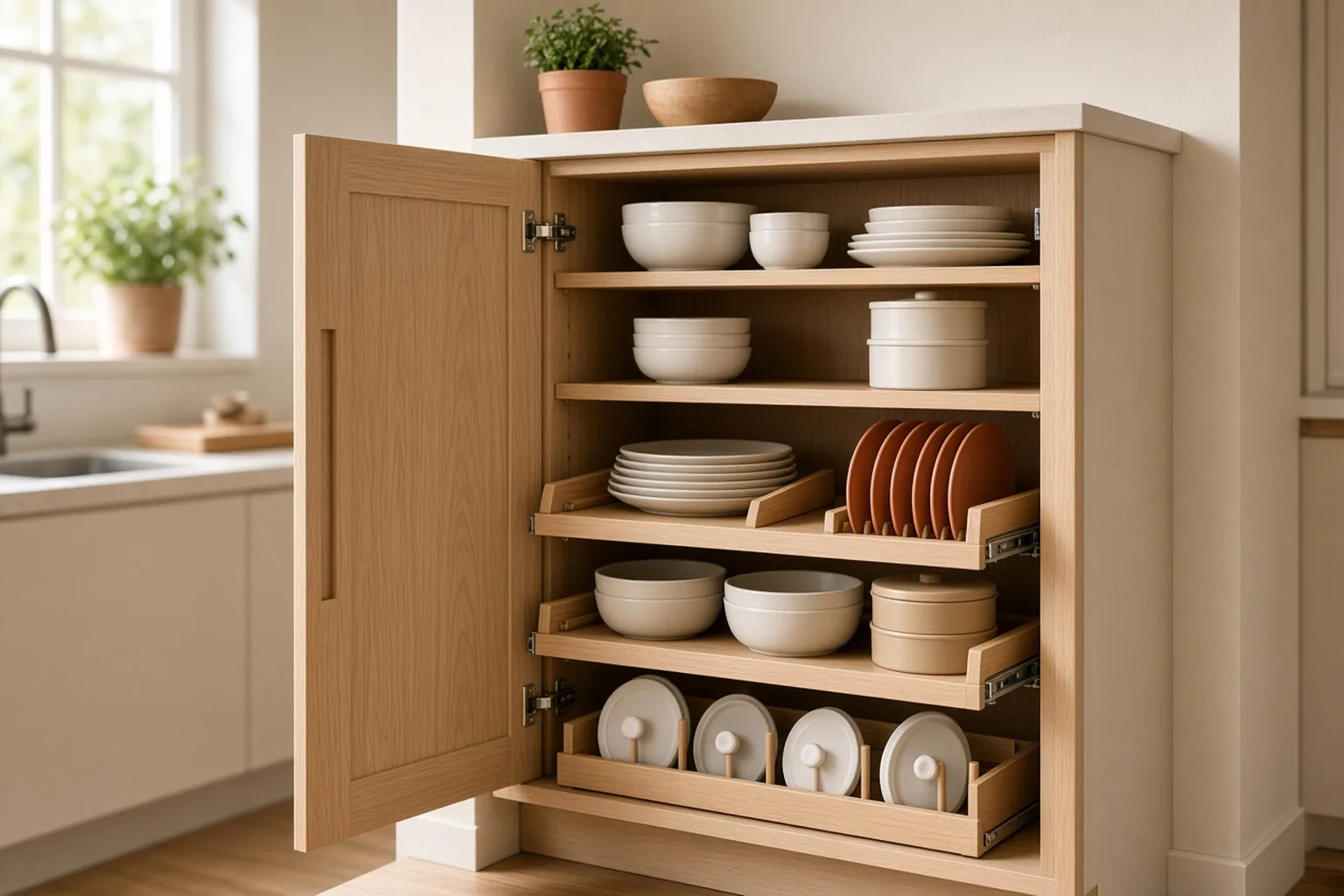
Best Kitchen Cabinet Organizers for Small Kitchens
An honest buying guide to kitchen cabinet organizers for small kitchens: pull-out shelves, lazy Susans, stacking shelves and what actually fits tight cabinets.
Kitchen
Drawer Dividers Buying Guide: Types and What to Look For
Learn which drawer divider types suit your kitchen, what features matter, and how to choose a practical fit for everyday storage.