Under-Sink Storage Solutions That Actually Work
Updated September 2026
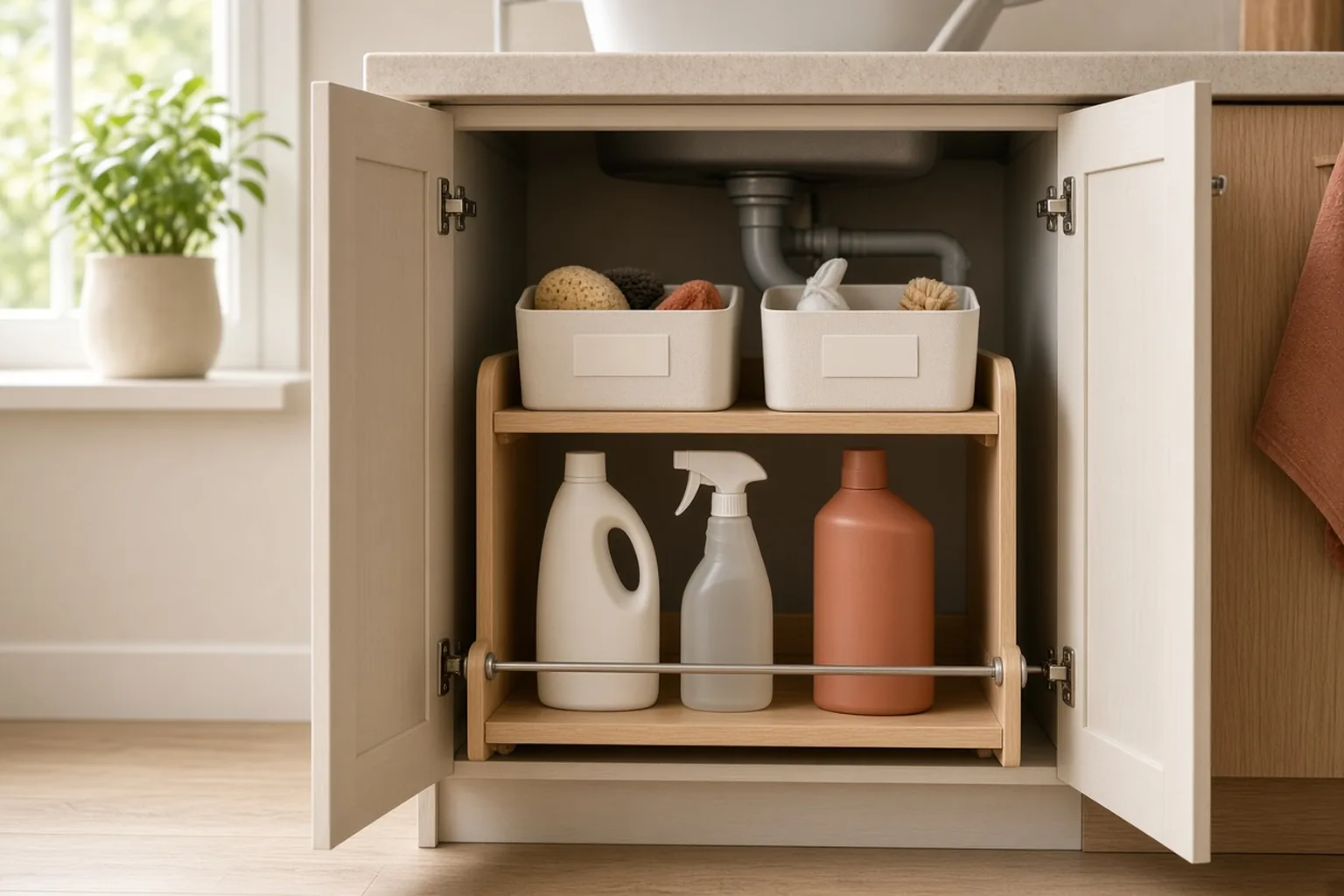
Quick answer: The cabinet beneath a kitchen sink has an awkward job. It needs to hold cleaning bottles, spare sponges, bags, cloths, and sometimes a small bin, while leaving room for plumbing and occasional leaks.
Top picks at a glance
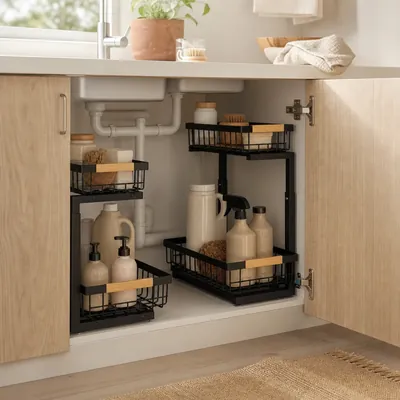
Under Sink Two Tier Organizer Pipe Friendly
- Pros: A two-tier shelf is a straightforward way to create vertical storage for bottles and smaller supplies.
- Pros: Designed to fit around the pipes, the space most cabinets waste.
- Con: Measure the pipe position and the garbage disposal first; not every layout allows two tiers.
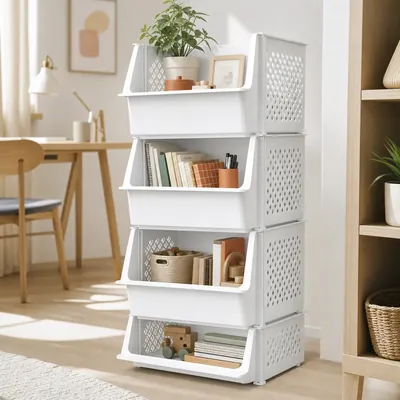
Stackable bins and open-front baskets
- Pros: Stackable bins make sense when your cabinet has irregular zones or when you want to group supplies by task.
- Pros: Modular sizes stack and label, so the same bins work in any room.
- Con: Measure the shelf depth and count the lids; opaque bins need labels to stay useful.
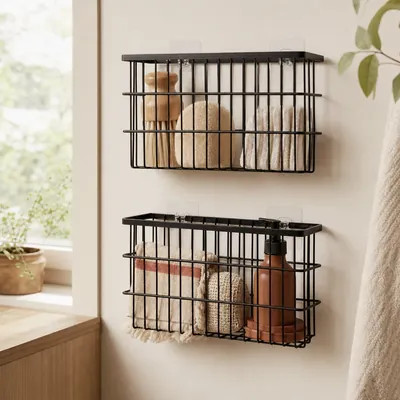
Door-mounted racks and slim holders
- Pros: The inside of the cabinet door can provide useful storage for flat, lightweight items such as sponges, brushes, gloves, or trash-bag rolls.
- Pros: Chosen for small spaces: compact footprint and a size that fits standard shelves and closets.
- Con: Measure the space first and check the load rating; returns are the most common mistake with organizers.
Quick comparison
| Option | Best for | Before buying |
|---|---|---|
| Under Sink Two Tier Organizer Pipe Friendly | Best overall | Check fit and load rating |
| Pull-out drawers and sliding trays | Best for flexibility | Check fit and load rating |
| Stackable bins and open-front baskets | Best for limited space | Check fit and load rating |
| Door-mounted racks and slim holders | Best for comparison | Check fit and load rating |
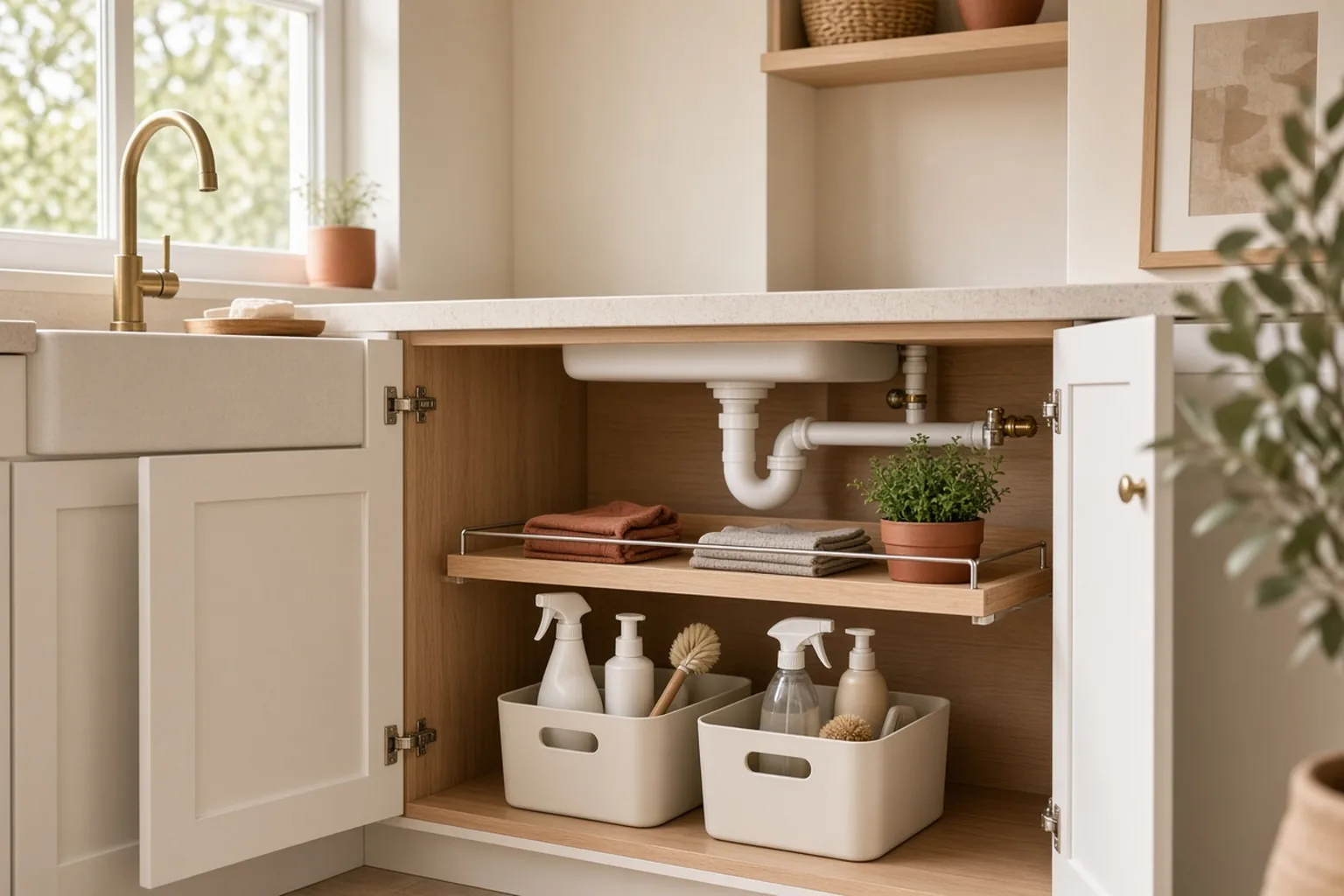
What actually matters when choosing under-sink storage
- Clearance around plumbing. Measure where the pipes sit, not just the cabinet's outside dimensions. An organizer with a cutout or a narrow footprint can use space without pressing against connections.
- Access to the back. Deep cabinets hide supplies easily. Pull-out trays, drawers, or bins with open fronts make it possible to reach the back without taking everything out first.
- Moisture resistance. Choose surfaces that tolerate damp bottles and can be wiped clean. Fabric may be useful for lightweight items, but it is less forgiving if a leak goes unnoticed.
- Weight and stability. Full bottles are heavy. Look for a solid base, a sensible load capacity, and feet or a non-slip surface that keep the organizer steady when a drawer or tray moves.
Our take
Start with measurements and a short inventory rather than buying a complete system immediately. If the main problem is losing bottles at the back, a pull-out tray is the most practical first test. If plumbing takes up the center and the cabinet is reasonably tall, a pipe-friendly two-tier shelf may create enough separation without installation. Bins are flexible for grouping less-used supplies, while a door rack is best treated as extra capacity for small, light items. If you only buy one thing, choose an organizer that leaves the pipes accessible and lets you remove the contents in one motion. A tidy cabinet should also be easy to inspect after a spill.
FAQ
What should I measure before buying?
Measure the usable width, depth, height, clearance, and the load the organizer must carry before ordering.
Which option is best for a small space?
Choose the product that solves the main bottleneck while leaving doors, walkways, and everyday access clear.
How do I avoid a return?
Check assembled dimensions, installation requirements, weight limits, and the retailer return policy before buying.
Keep reading
Related guides
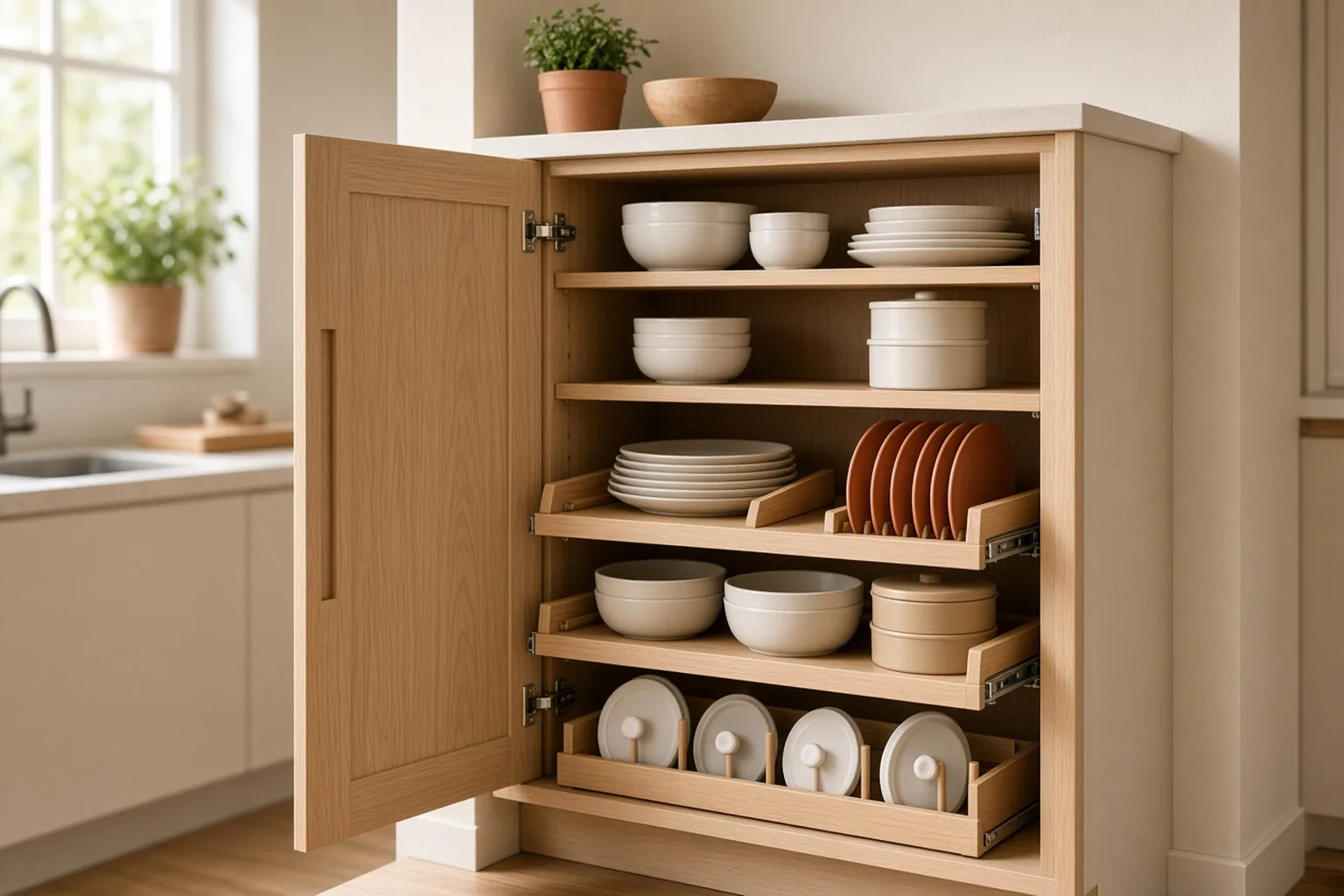
Kitchen
Best Kitchen Cabinet Organizers for Small Kitchens
An honest buying guide to kitchen cabinet organizers for small kitchens: pull-out shelves, lazy Susans, stacking shelves and what actually fits tight cabinets.
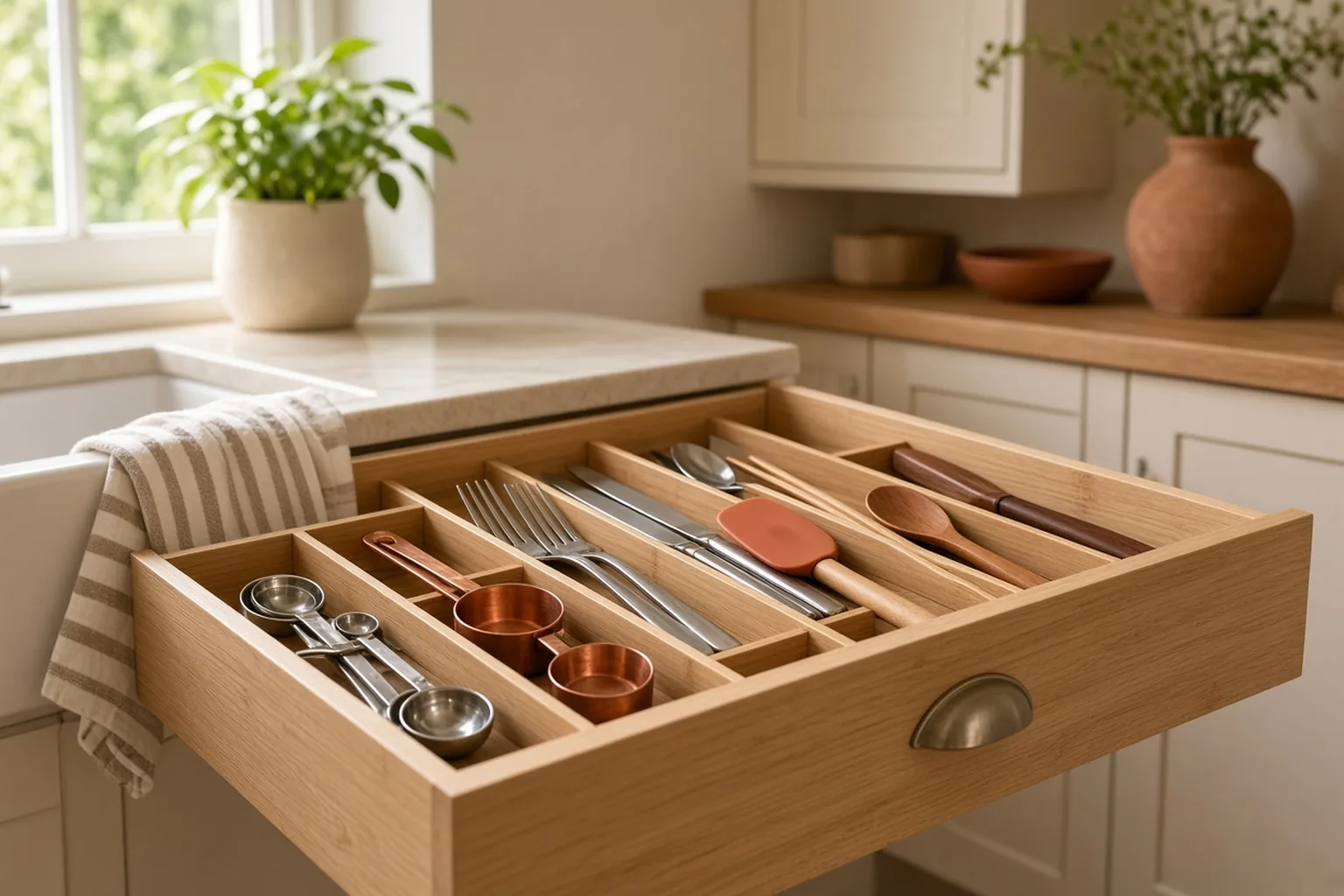
Kitchen
Drawer Dividers Buying Guide: Types and What to Look For
Learn which drawer divider types suit your kitchen, what features matter, and how to choose a practical fit for everyday storage.
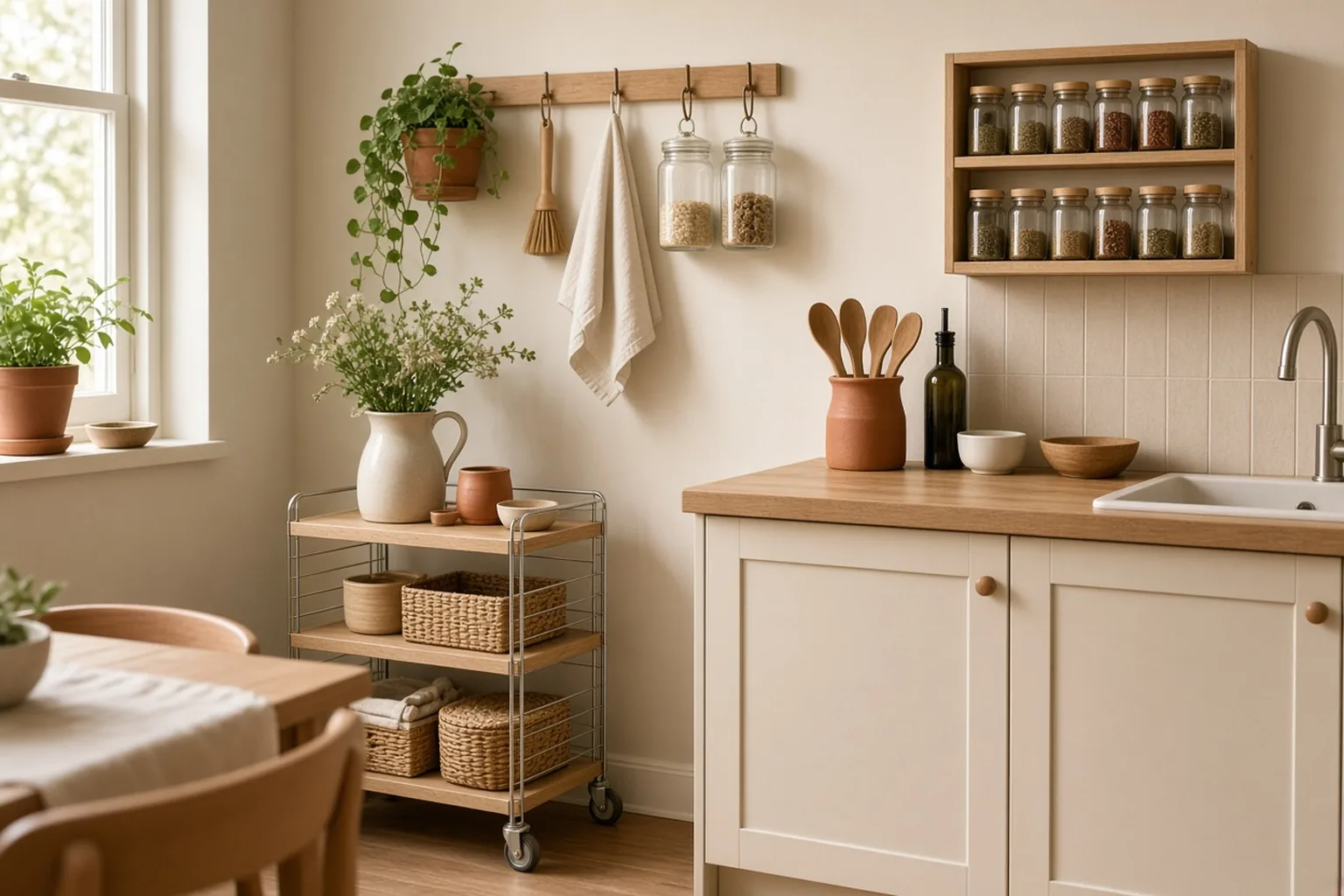
Kitchen
How to Organize a Small Apartment Kitchen
Organize a small apartment kitchen by mapping work zones, reducing duplicates, using vertical storage, and keeping counters functional.