Back to school · Home reset
Back-to-School Home Organization Checklist
Set up the few home zones that carry the school day, so mornings start with fewer searches and afternoons have somewhere to land.
Updated August 2026
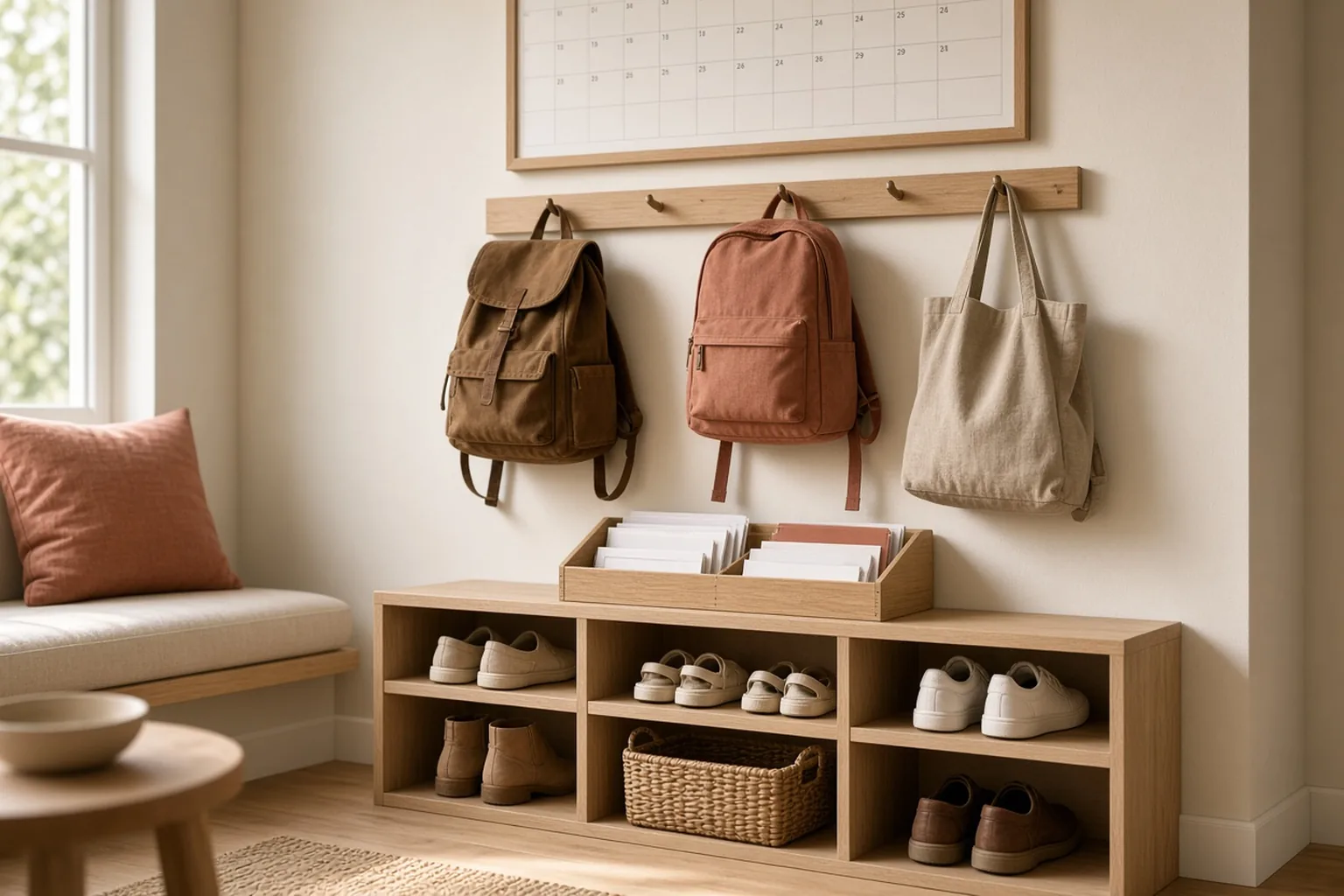
Quick answer: Create four visible stations: an entryway landing zone, a homework surface, a lunch-and-water-bottle spot, and a paper inbox. Keep the supplies for each station together, give every family member one personal drop zone, and use a short evening reset.
Checklist-ready products
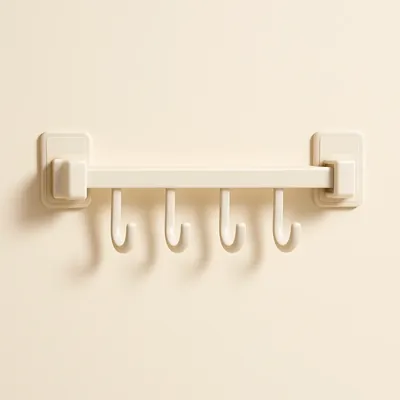
Removable hooks or an adhesive rail
- Pros: Gives backpacks and jackets a clear landing spot without adding floor furniture.
- Pros: Useful in rentals when the product and surface are compatible.
- Con: Follow the weight limit and removal instructions; never hang more than the wall can support.
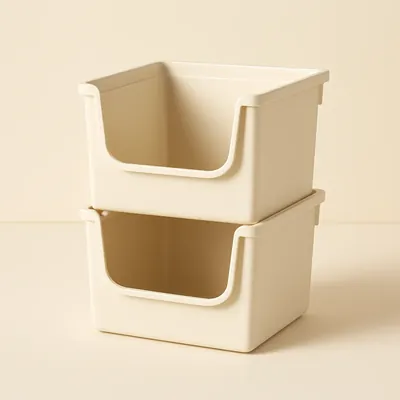
Open-front stackable bins
- Pros: Separates current subjects, chargers, and art supplies without hiding them behind a lid.
- Pros: Stackable design can grow vertically on a small desk.
- Con: Open bins need a weekly edit or they become clutter containers.
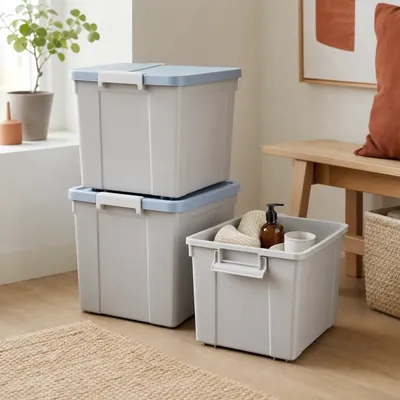
Reusable write-on labels
- Pros: Makes bins and paper folders easy to identify when routines change.
- Pros: Helpful for shared supplies and younger children building independence.
- Con: Labels support a system; they do not replace a regular reset.
The back-to-school home checklist
Entryway
- Choose one hook, basket, or shelf space per person.
- Place a small tray for keys, permission slips, and items that must leave tomorrow.
- Keep shoes to one everyday pair per person at the door; move extras elsewhere.
Homework station
- Clear one dependable work surface, even if it is part of the dining table.
- Add task lighting if the room is dim and place chargers where they cannot become a trip hazard.
- Use one open bin for current work and one folder for papers that need an adult response.
Lunch and morning zone
- Store lunch containers, water bottles, and napkins together near the kitchen exit.
- Keep a washable catch-all tray for clean bottles waiting to be filled.
- Choose a backup shelf for shelf-stable snacks so the counter stays clear.
Papers and permissions
- Set up an inbox for incoming school papers and an “out” spot for signed forms.
- Give important dates a single calendar home; duplicate reminders only when they help.
- Recycle envelopes and duplicates during the weekly reset.
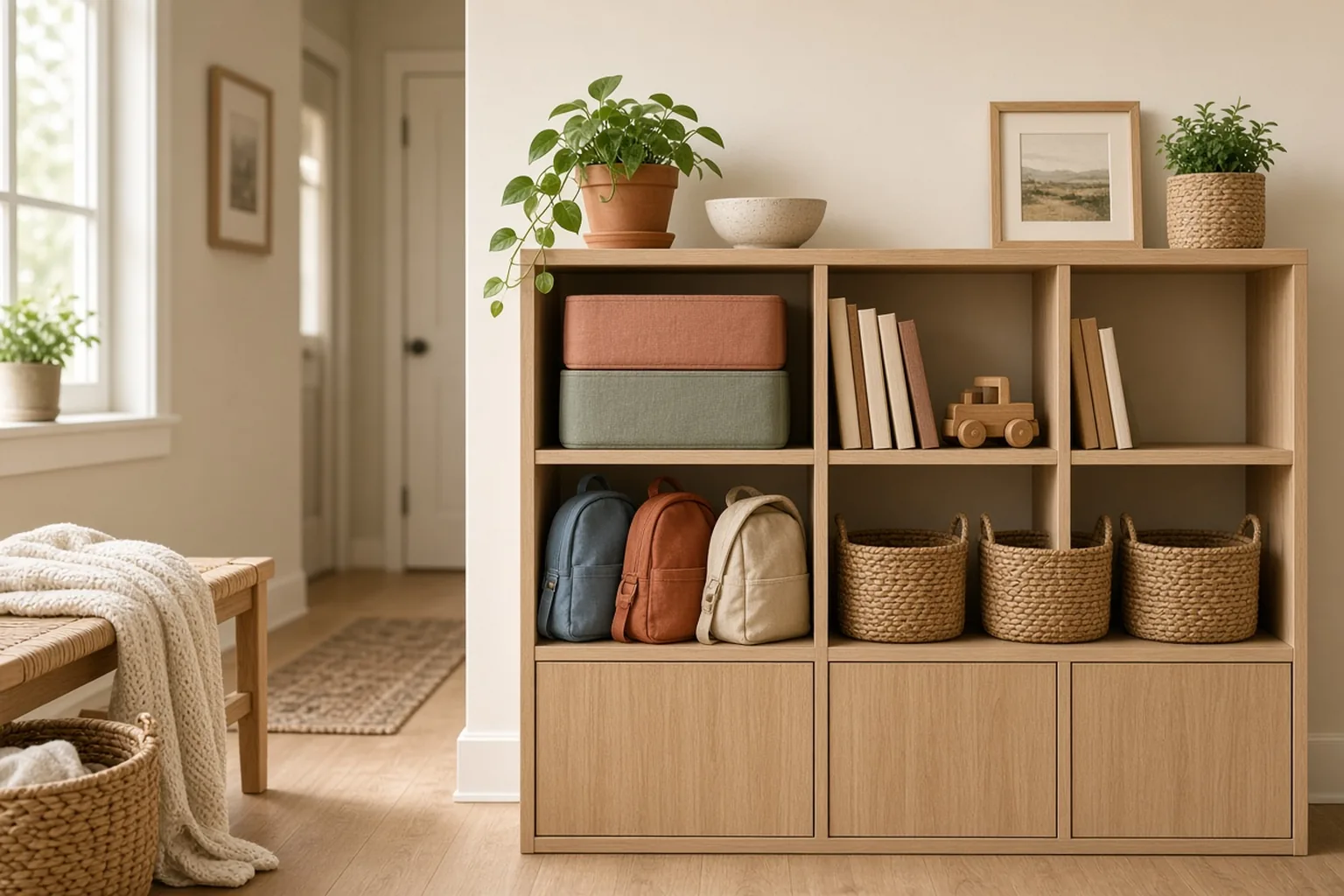
Build the evening reset
Give the routine an end point: backpacks hung, lunch containers at the sink, homework in the bag, and the entry tray empty. A reset that takes five to ten minutes is easier to protect than an elaborate family command center. If a station repeatedly overflows, reduce what it is asked to hold or move it closer to the action.
For a small home, flexibility matters. A dining table can be a homework desk when the supplies live in a handled bin. A narrow console can be both entryway storage and a charging surface when cables are contained. The best system disappears into the day instead of demanding attention.
FAQ
Where should a homework station go in a small home?
Choose a bright, low-traffic surface near the supplies the student uses. It can be a desk, a dining-table section, or a fold-down surface that clears after homework.
How do I organize school papers at home?
Use one incoming inbox, one action folder, and one calendar location. Keep the categories few enough that everyone can use them without asking where a paper belongs.
What should I do the night before school?
Pack the bag, set out clothes, move lunch containers to the sink, and return the homework surface to ready-to-use condition. The routine should be visible and repeatable.
Keep reading
Related guides
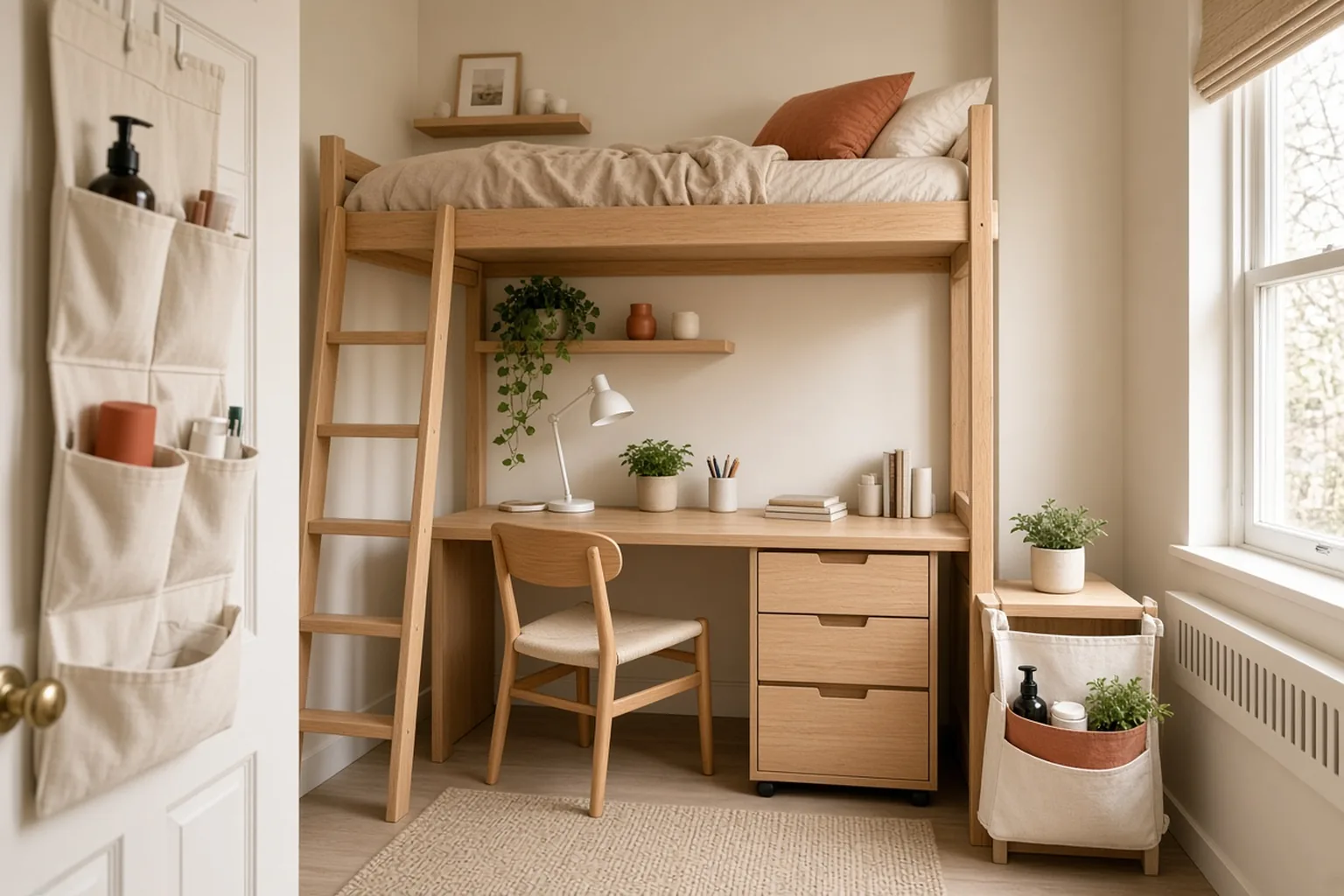
Back to school
Dorm Room Organization Ideas for Small Spaces
Make a small dorm room easier to live in with under-bed storage, collapsible cubes, vertical zones, and a low-effort reset routine.
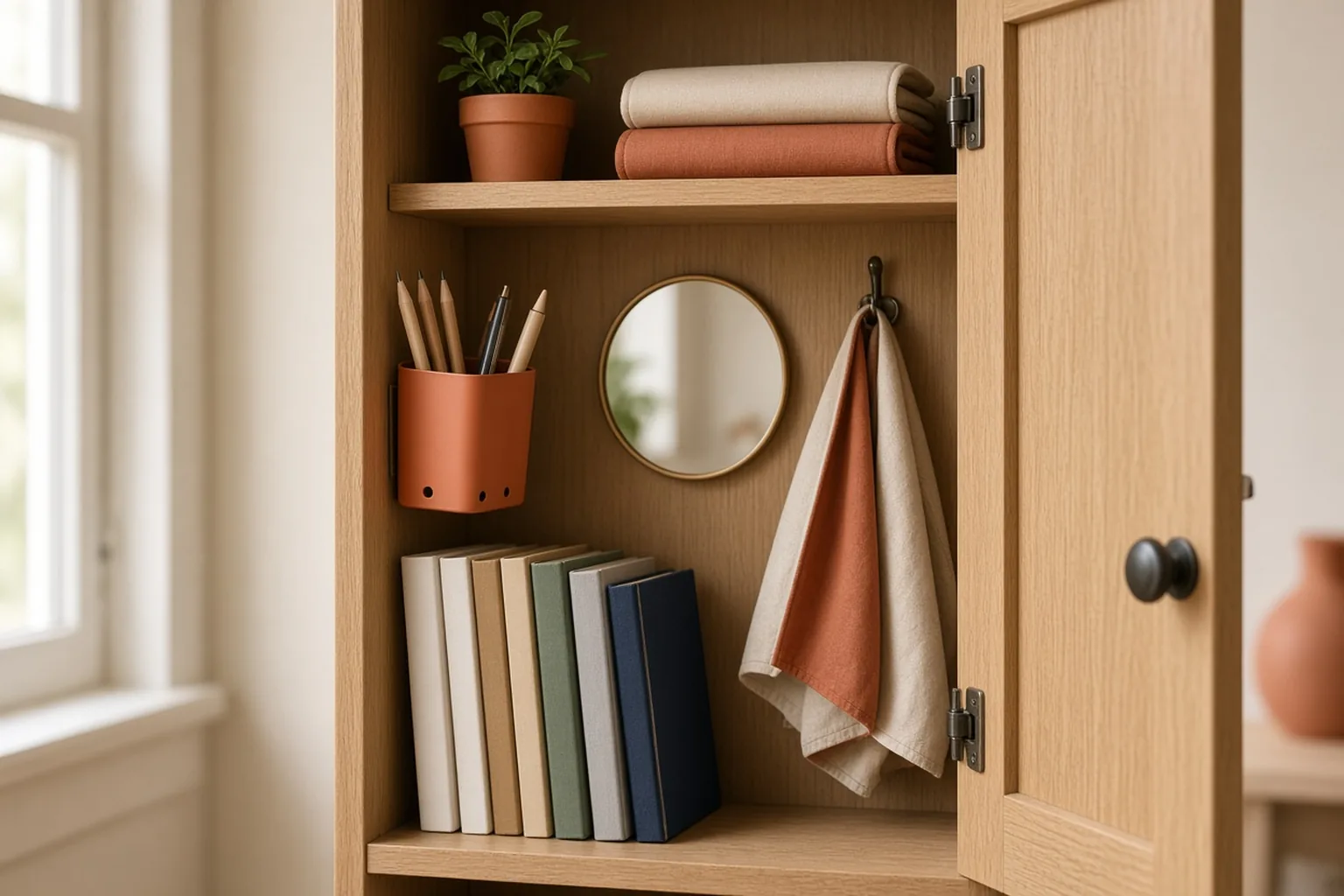
Back to school
Locker Organization Ideas That Actually Fit
Make a school locker easier to use with slim shelves, magnetic storage, vertical hooks, and a no-crush layout that protects usable space.
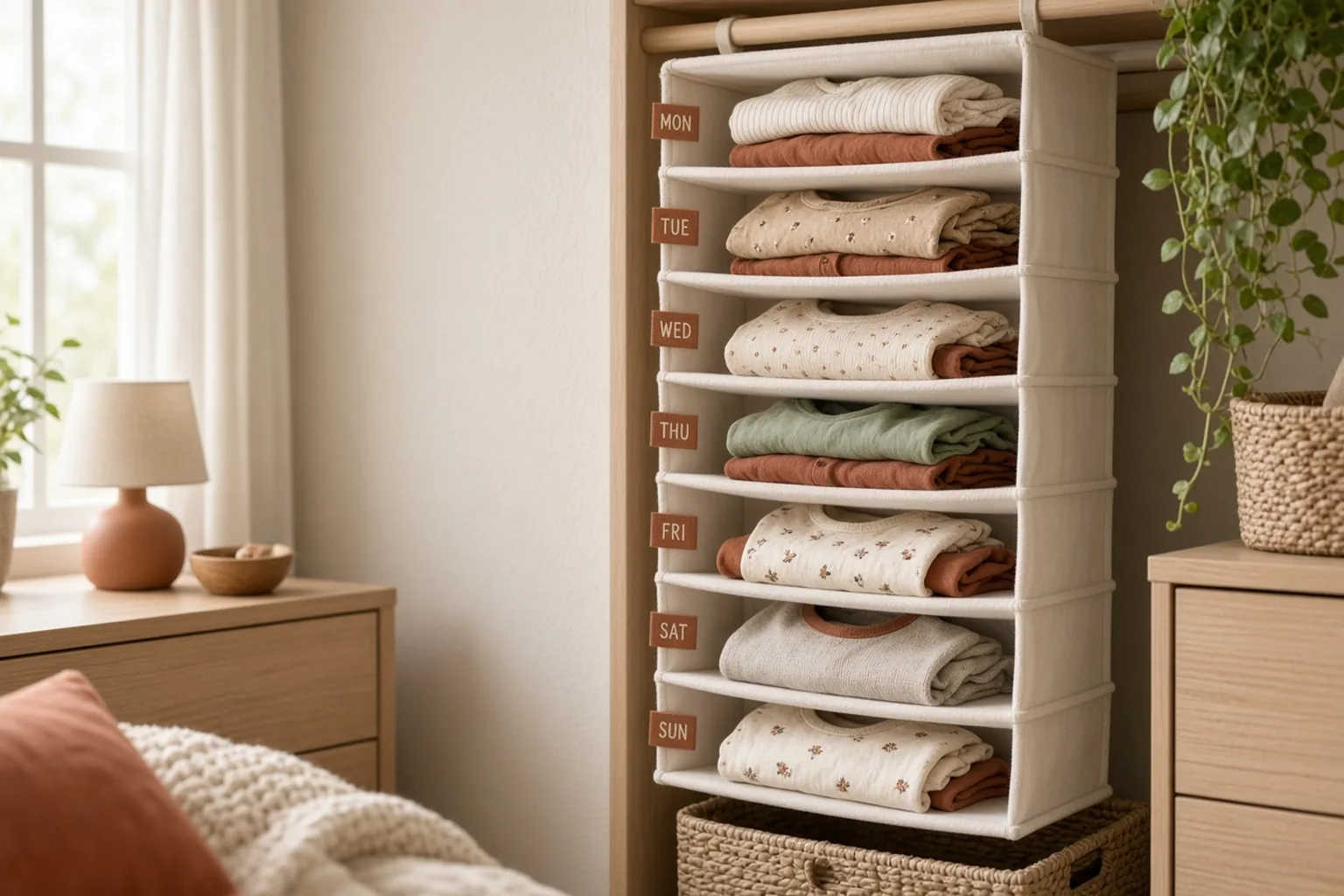
Back to school
Best Weekly Clothes Organizers for Kids (2026 Back-to-School)
Compare 3 weekly clothes organizers for kids' closets for the back-to-school routine: price, rating, capacity, fit, and what to check before buying.