Back to school · Closet routine
Best Weekly Clothes Organizers for Kids (2026 Back-to-School)
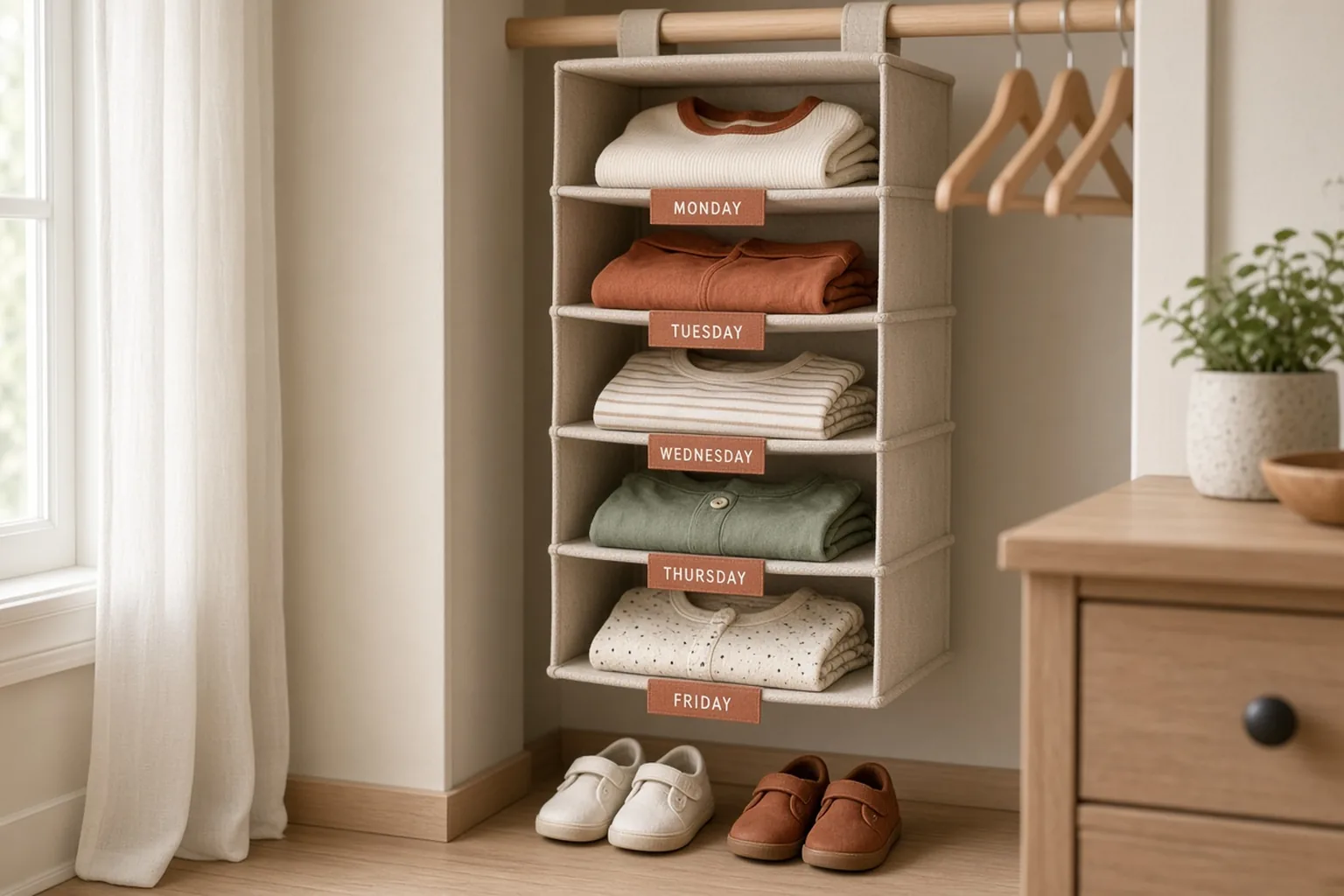
Getting five school-day outfits ready is easier when each day has a place. A weekly clothes organizer turns the closet into a simple visual routine: fill the sections once, then grab Monday's outfit without making a new decision every morning.
Updated November 2026
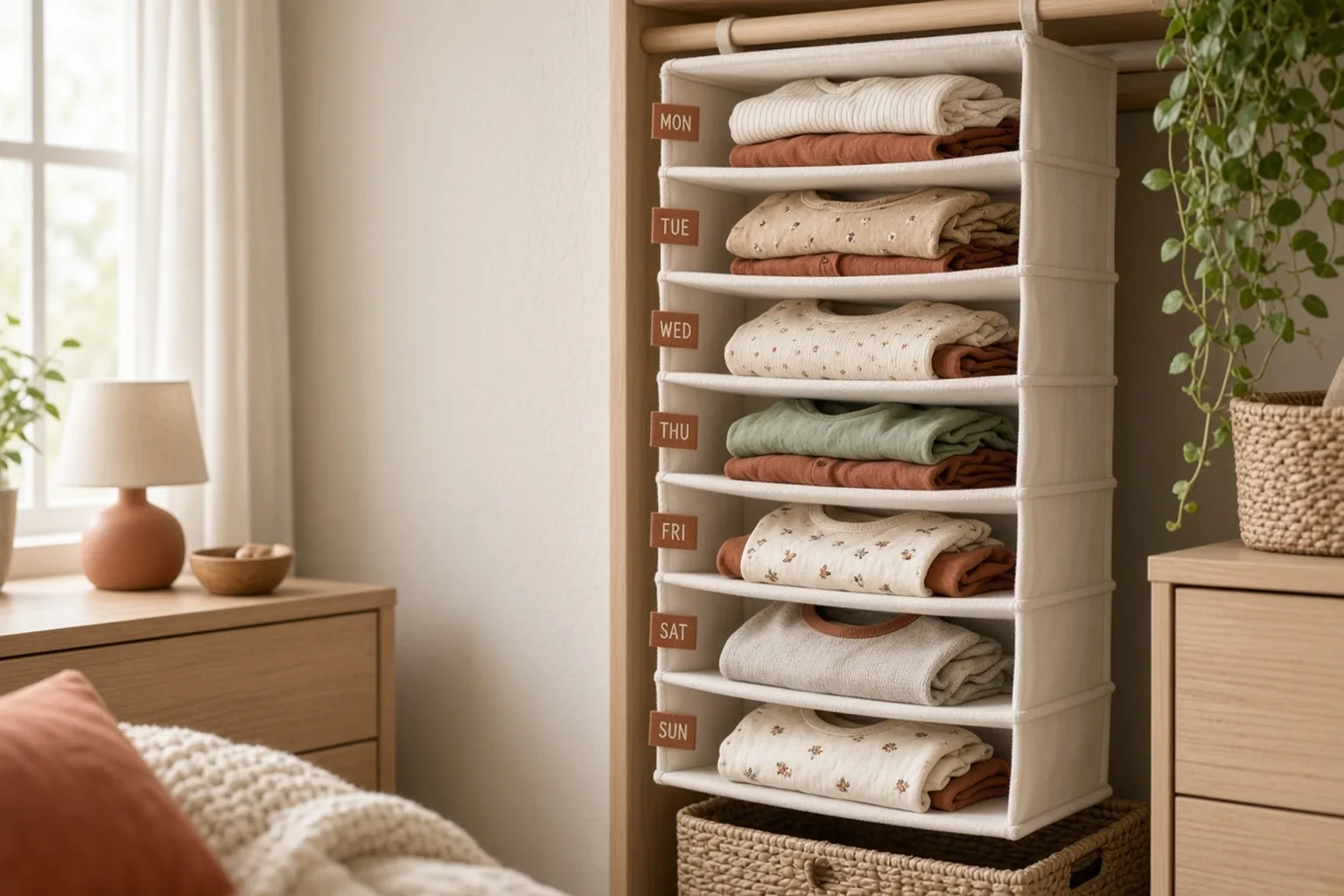
Quick answer: A weekly clothes organizer for kids is a hanging closet unit with five to seven labeled shelves, usually Monday through Friday or Monday through Sunday, where you load one full outfit per day ahead of time. For school mornings, a five-shelf Monday-to-Friday version is the most direct choice: each cubby is typically about 12 inches wide by 12 inches deep, which holds one folded outfit plus socks and underwear. If you need weekend slots or extra storage, choose a seven-day version or a general over-door organizer and add your own day labels.
This guide is about daily outfit planning, not seasonal storage
A weekly organizer keeps this week's clothes visible and accessible. It is a different job from vacuum storage bags or seasonal closet storage, which reduce the volume of clothes not currently in use — see our off-season clothes storage guide for that problem instead.
Three organizers to compare
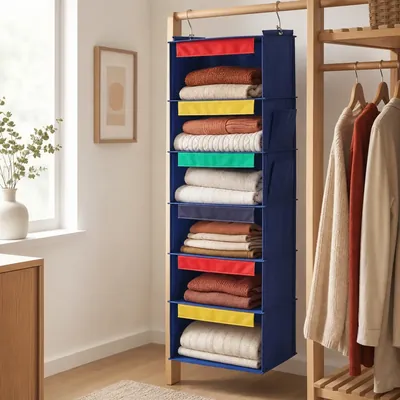
Monday through Friday hanging weekly clothes organizer
- Pros: One labeled section per school day makes the format explicit — a clean handoff between Sunday prep and weekday independence.
- Pros: Fits a full outfit (top, bottom, socks) per compartment when sized correctly.
- Con: Weekday-only labels if your family needs Saturday activities, uniforms, or sports categories.
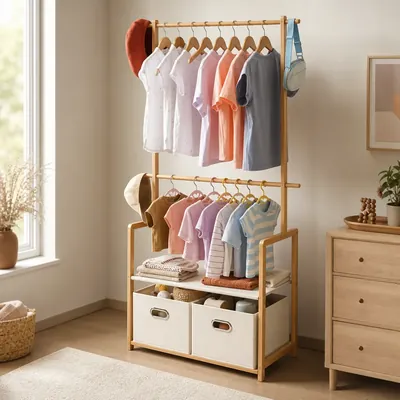
Weekly kids clothes organizer, day of week
- Pros: The value-oriented pick if you're testing whether your child actually follows a preloaded outfit routine.
- Pros: Compact enough for a shared bedroom or sibling setup.
- Con: Confirm the live listing's material, internal width, and label layout before buying — a low price is only a saving if it survives the school term.
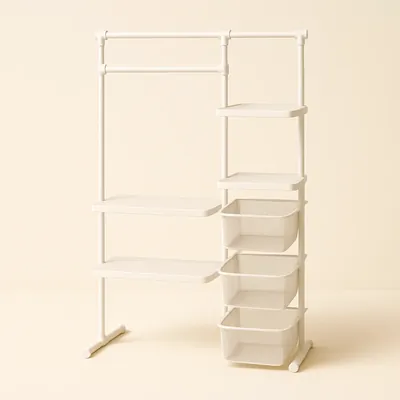
Five-tier over-door organizer
- Pros: Useful when a rod is already full or the closet is small — separate spaces for shoes, accessories, and spare clothes.
- Pros: High review-volume category on Amazon, a broadly used format.
- Con: Five tiers are not automatically five weekday-labeled compartments — measure the door and label it yourself.
Quick comparison
| Option | Why it works in a small home | Before you buy |
|---|---|---|
| Monday through Friday hanging weekly clothes organizer | One labeled section per school day makes the format explicit — a clean handoff between Sunday prep and… | Weekday-only labels if your family needs Saturday activities, uniforms, or sports categories. |
| Weekly kids clothes organizer, day of week | The value-oriented pick if you're testing whether your child actually follows a preloaded outfit routine. | Confirm the live listing's material, internal width, and label layout before buying — a low price is only a… |
| Five-tier over-door organizer | Useful when a rod is already full or the closet is small — separate spaces for shoes, accessories, and spare… | Five tiers are not automatically five weekday-labeled compartments — measure the door and label it yourself. |
How to set up a day-of-week closet routine
- Choose one loading day. Sunday afternoon or the evening before the first school day usually works better than a rushed Monday morning.
- Load complete outfits. Keep the outfit together; don't use the compartments as a second laundry hamper.
- Put the next day at eye level. A child should be able to identify the label and pull out the outfit without climbing.
- Add one exception space. Keep PE clothes or weather layers in a separate, clearly named place so they don't break the weekday sequence.
- Review on Friday. Return unworn items, note what no longer fits, and reload only clean, ready-to-wear clothes.
What to check before buying
Dimensions and capacity
Measure a typical outfit, not just a folded T-shirt. School uniforms, hoodies, and winter trousers need more room than summer basics.
Hanging method
For a closet-rod model, measure rod diameter, vertical drop, and floor clearance. For an over-door model, measure door thickness and confirm the door still closes with the hardware installed.
Labels and flexibility
Printed weekday labels are convenient but can be restrictive for rotating schedules. Removable labels or blank pockets may be more useful than a fixed layout.
Price and availability
Open the Amazon listing on the day you buy and check seller, shipping, and delivery date — prices, ratings, and stock change over time.
Will a days-of-the-week organizer fit my kid's closet rod?
Most hanging day-of-week organizers are about 12 inches wide, 12 inches deep and 30 to 48 inches long, depending on whether they have five or seven shelves. Measure three things before you buy. First, the vertical drop from the rod to the floor or to the next shelf: a standard reach-in closet rod sits around 66 inches high, so a 48-inch unit fits, but on a lower kids' rod at about 42 to 45 inches, a seven-shelf unit may hit the floor. Second, rod depth: you need roughly 12 inches of clear space in front of the back wall so the cubbies don't bend. Third, the rod itself: the hook-and-loop straps usually need a rod under about 1.5 inches thick.
For renters, this is one of the few closet upgrades that needs no screws or adhesive. If the closet has no rod, a tension rod rated for at least 15 pounds can hold a loaded five-day organizer, but check the rating, since a full week of jeans and sweatshirts can weigh more than you'd expect. See our closet guides for small-space layouts.
How much does each day's shelf actually hold?
A typical 12 by 12 inch cubby with 8 to 10 inches of height holds one school outfit: a folded shirt, pants or a skirt, underwear and a pair of socks. It gets tight with bulky items. A hoodie plus jeans usually fills the whole space, and winter layers like a fleece or a thick sweater often won't fit next to the rest of the outfit. Plan to keep jackets on a hook by the door rather than in the daily slot.
Fold each piece into a flat rectangle about 10 inches wide, then stack the heaviest item, usually pants, on the bottom. Fabric shelves sag under weight, so very full slots lean forward and can make the lower cubbies harder to reach. Some units come with a cardboard or plastic insert for each shelf. If yours doesn't, a piece of corrugated cardboard cut to 11.5 by 11.5 inches keeps the shelf flat. For younger kids, place school days at the shelf heights they can reach on their own, which usually means anything below about 40 inches.
FAQ
What is a weekly clothes organizer for kids?
It is a hanging or compartmentalized closet organizer used to prepare clothing by weekday, keeping the current week's outfits visible and ready to grab — unlike seasonal storage.
Is a five-tier over-door organizer the same as a Monday-to-Friday organizer?
No. Five tiers provide five storage areas, but they may not be labeled by weekday or sized for complete outfits. Check the product layout before assuming they're interchangeable.
How often should I reload the organizer?
Once a week is a good starting point, reset when laundry is clean and the school schedule is known, with a quick Friday review to remove clothes that weren't worn.
What is the best weekly clothes organizer for kids?
For school-age kids, a five-shelf Monday-to-Friday hanging organizer is the simplest choice because there is one labeled slot per school day and nothing extra to manage. Choose a seven-shelf version if weekend activities need planned outfits too, and make sure your rod has enough clearance below it for the longer unit.
Can I use a regular hanging closet organizer as a days-of-the-week organizer?
Yes. Any hanging shelf unit with five or more cubbies around 12 inches wide works if you add your own labels, such as clip-on tags or fabric marker on masking tape. The only real downside is that general organizers often have taller, uneven shelves, so outfits can shift and get mixed up unless you fold them flat.
Do school clothes organizers work for toddlers and preschoolers?
They do, but hang the unit low enough that the bottom shelves are within reach, usually under 36 inches for a preschooler, and use picture labels or color codes instead of words. Toddler outfits are smaller, so you can often fit both the clothes and a spare change in a single cubby.
Keep reading
Related guides
Back to school
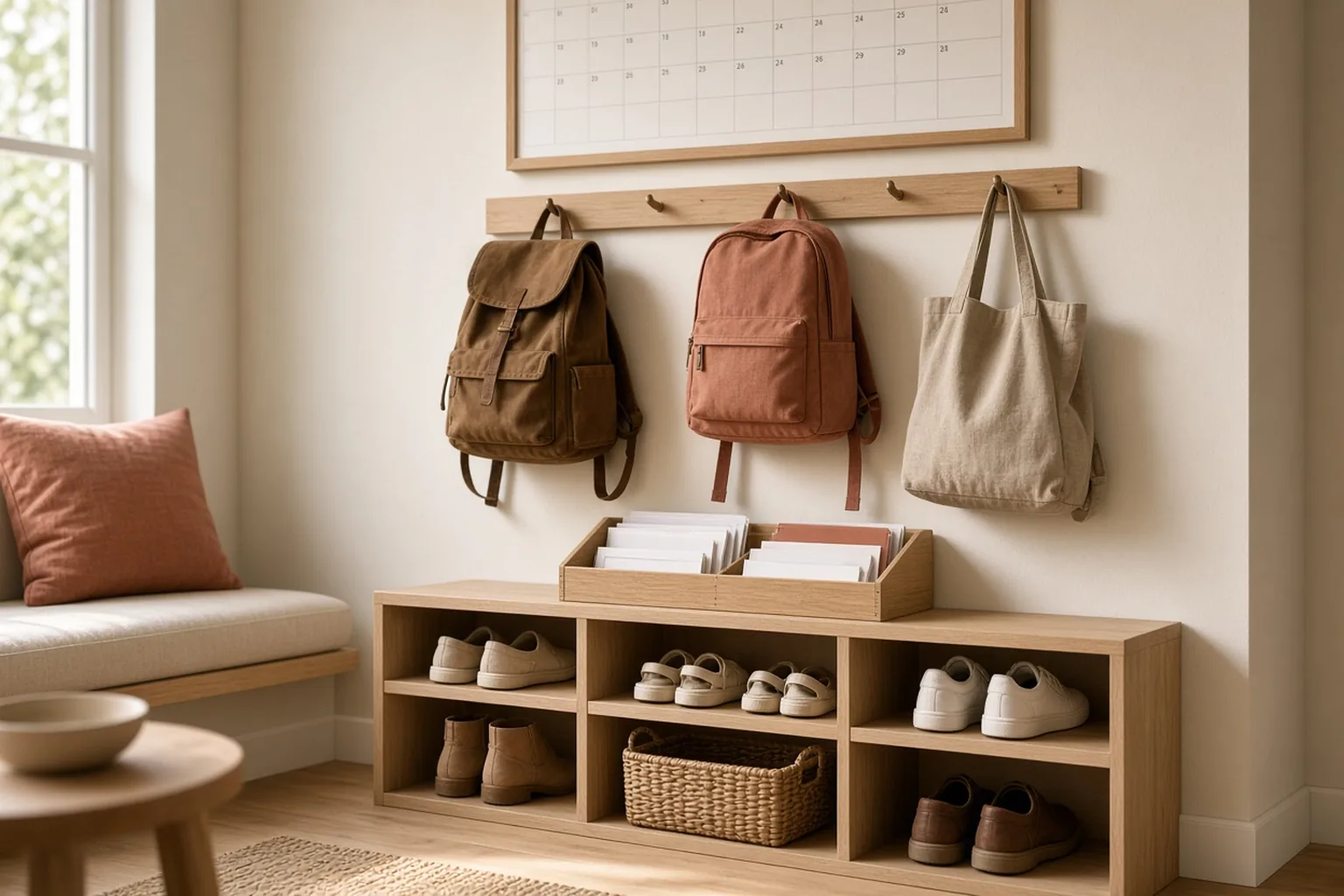
Back-to-School Home Organization Checklist
A practical back-to-school home organization checklist for an entryway, homework station, lunch zone, laundry, and school papers.
Back to school
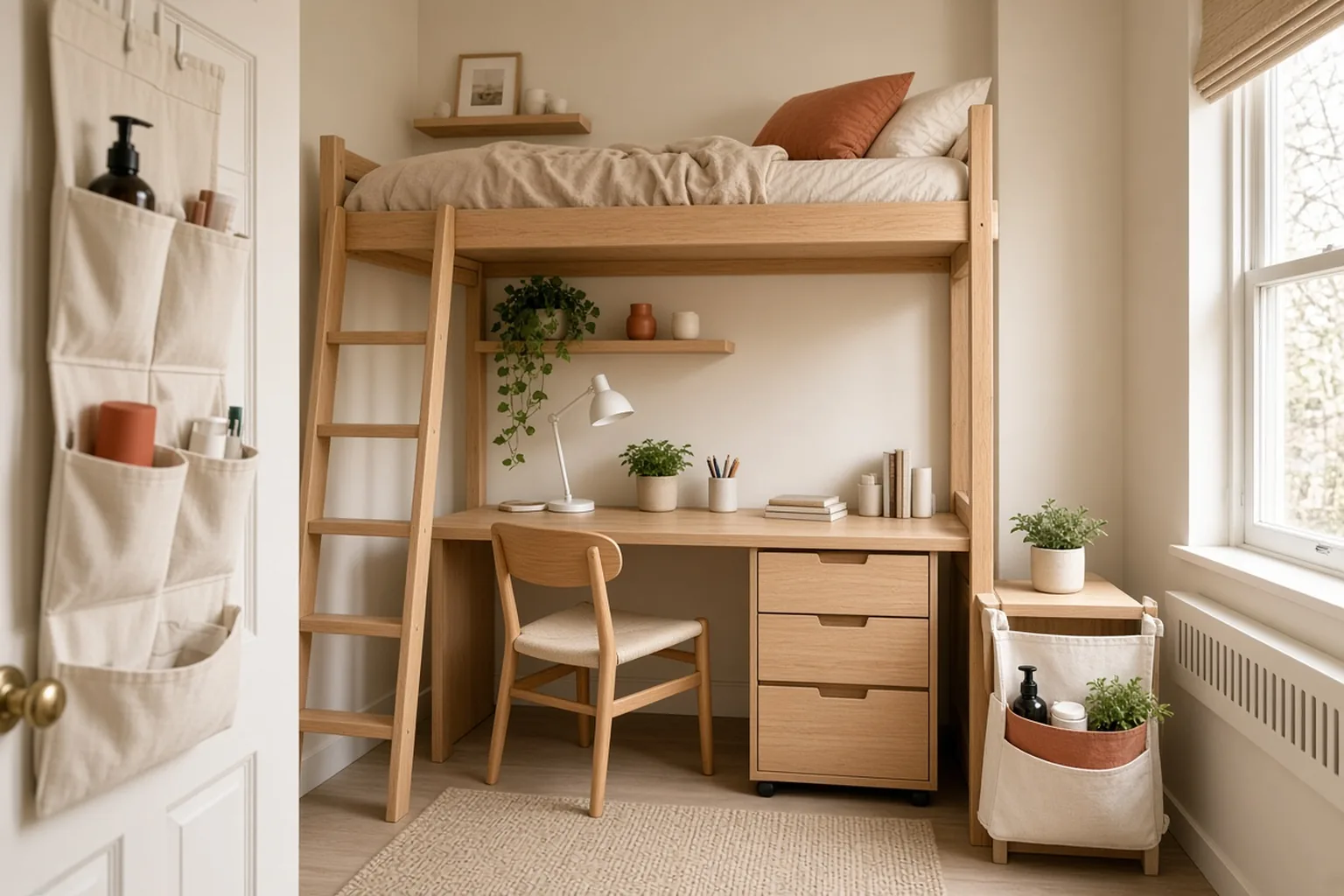
Dorm Room Organization Ideas for Small Spaces
Make a small dorm room easier to live in with under-bed storage, collapsible cubes, vertical zones, and a low-effort reset routine.
Back to school
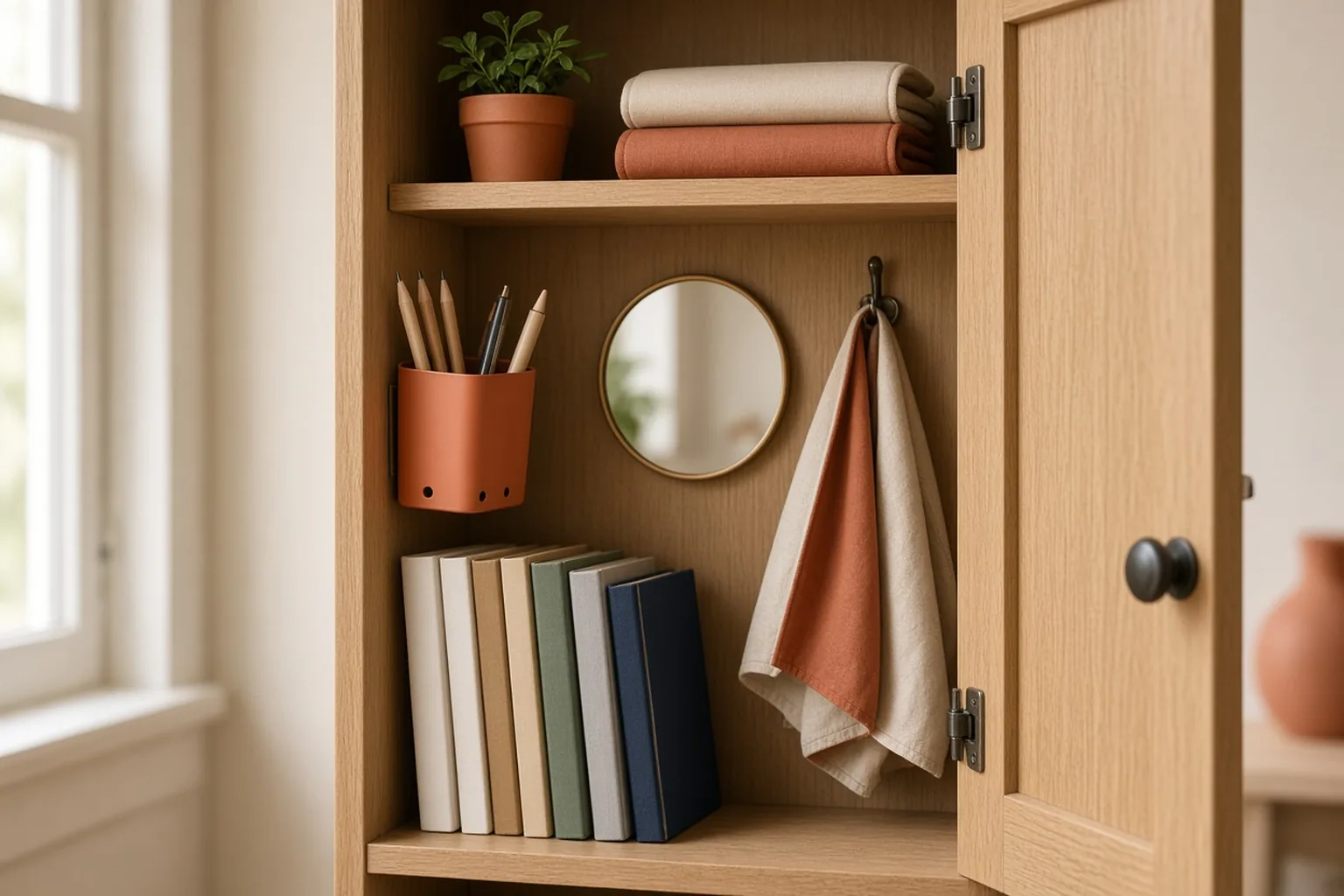
Locker Organization Ideas That Actually Fit
Make a school locker easier to use with slim shelves, magnetic storage, vertical hooks, and a no-crush layout that protects usable space.